
Heated dry can help holiday glassware dry faster and leave fewer droplets, especially when rinse aid is used. Turn it on for glasses labeled dishwasher-safe and suitable for heat; when a glass’s care instructions are unclear, choose air drying and let the glass cool before handling or stacking.
In this guide:
- How heated dry affects glassware
- Which holiday glasses to put through the cycle
- How to load a mixed batch safely
- What to do about wet glasses and spots
How does heated dry affect holiday glassware?
Heated dry uses a dishwasher’s heating element and airflow to warm the tub and speed evaporation at the end of a wash. For heat-tolerant, dishwasher-safe glasses, it can shorten the wait for dry drinkware and reduce lingering droplets; rinse aid helps water spread into a thinner sheet instead of gathering into beads.
That setting is useful when a holiday meal leaves a full load of glasses waiting to be put away. It is still a choice about the glass, not just the dishwasher: the care label or the glassmaker’s instructions determine whether a particular item belongs in the machine and can tolerate heated drying.
Heated dry also does not guarantee a spotless result. Rinse aid can improve how water drains from glass, but droplets may remain, and minerals in drying water can leave visible marks. If the main problem is spots rather than wetness, changing the drying setting alone may not address the cause.
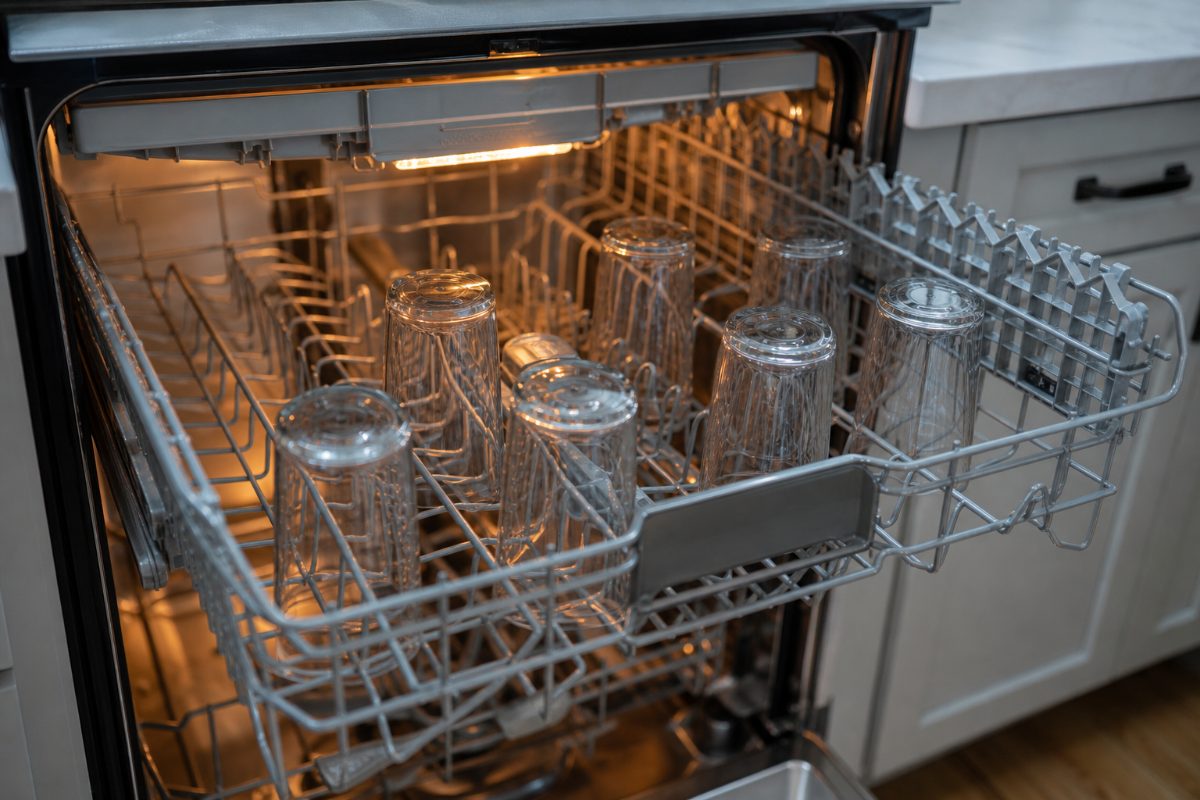
A dishwasher’s heated dry setting uses warmth and circulating air to speed evaporation. Rinse aid helps water drain across the glass surface.
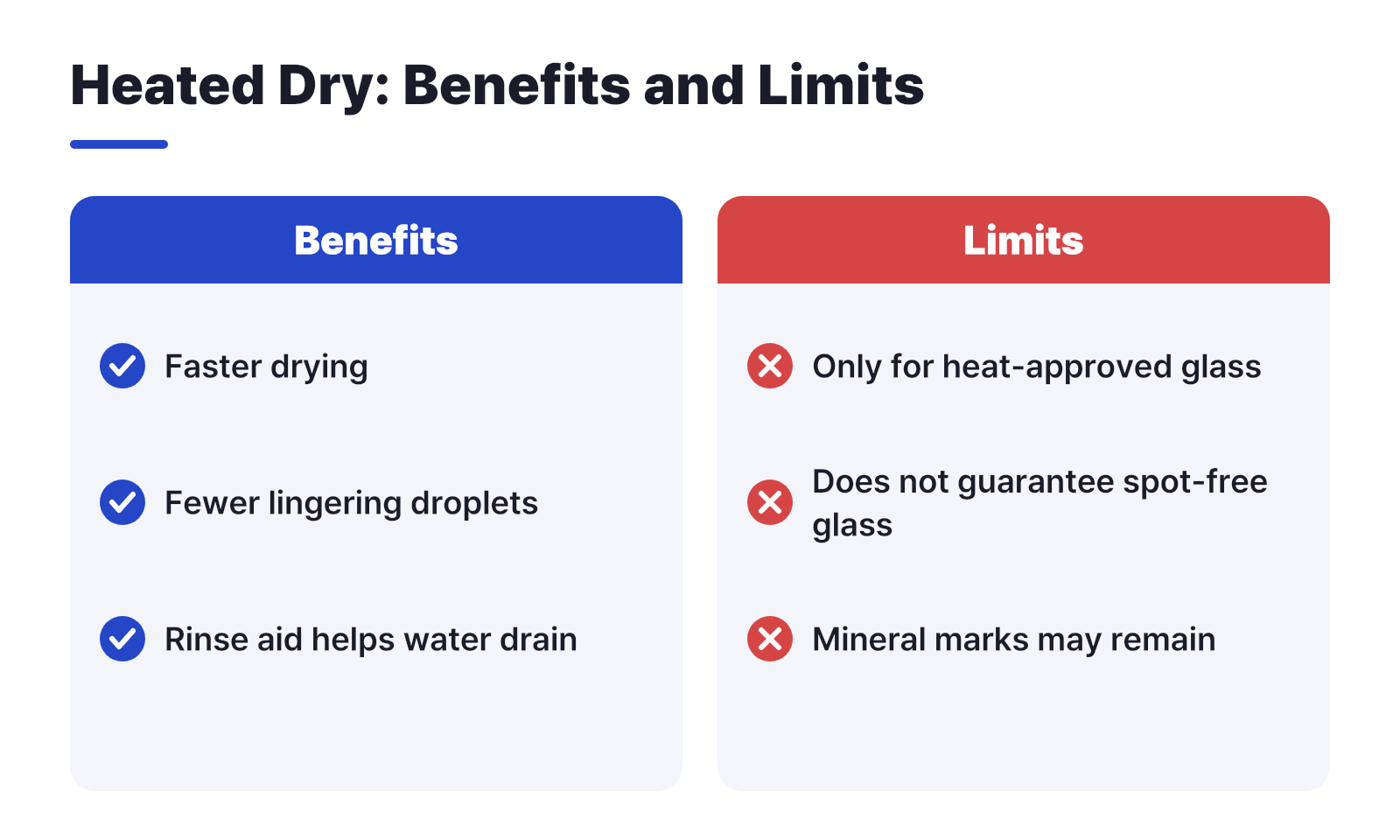
Which holiday glasses should use heated dry?
Use heated dry for glassware when its care instructions allow dishwasher washing and the item is suitable for heat. Tempered drinkware is among the heat-tolerant items identified for heated drying; for delicate, decorated, or unfamiliar glasses, follow the maker’s directions and choose air drying if those directions do not support heat.
“Glass” describes different materials, not one uniform response to temperature. Soda-lime glass is common in drinking glasses and jars, while tempered glass is treated to better withstand drops and temperature changes. Those material distinctions are useful context, but they do not replace the care instructions for a specific glass.
Wine glasses and crystal deserve an item-by-item decision. A wine glass may have a delicate shape or decoration, and the word “crystal” alone does not tell you whether its maker approves dishwasher use or heated dry. Look for a dishwasher-safe marking or the product’s care instructions. If the guidance is unavailable or unclear, hand-wash as directed by the maker, or use an allowed dishwasher cycle without heated dry rather than assuming the glass can take the heat.
For a mixed holiday load, separate decisions by item. A heat-tolerant glass may be suitable for heated dry while a glass with unknown care instructions is not. If the dishwasher setting applies to the whole load, the cautious choice is to leave heated dry off when the load includes glassware that is not approved for it.
How should you load glasses alongside holiday dishes?
Place each glass in a stable position where it is not pressed against another item, and keep it from being trapped beneath heavier dishes. Loading glasses with space around them helps prevent contact during the wash and gives water a path to drain; follow the rack and loading guidance in your dishwasher’s manual.
Check the glass for chips, cracks, or scratches before loading. Damaged glassware should be discarded rather than put through another cycle. A flaw is already a weak point, so adding handling or a temperature change is an unnecessary risk.
Holiday loads often combine glasses with ceramic plates and stainless-steel flatware. Heated dry is suited to heat-tolerant items such as ceramic dinnerware and stainless-steel flatware, but the least heat-tolerant item in a load can determine the safer setting. Keep wooden items, insulated mugs, delicate plastics, and items with decals or finishes out of heated drying unless their own care instructions specifically allow it.
After the cycle, allow hot glasses to cool before stacking or putting them away. Warm glass can be more prone to scratching, and placing one warm glass inside another can make them stick together as they cool. Handle them gently and set hot glassware on a dry cloth or potholder, not a damp towel or cold, wet surface.
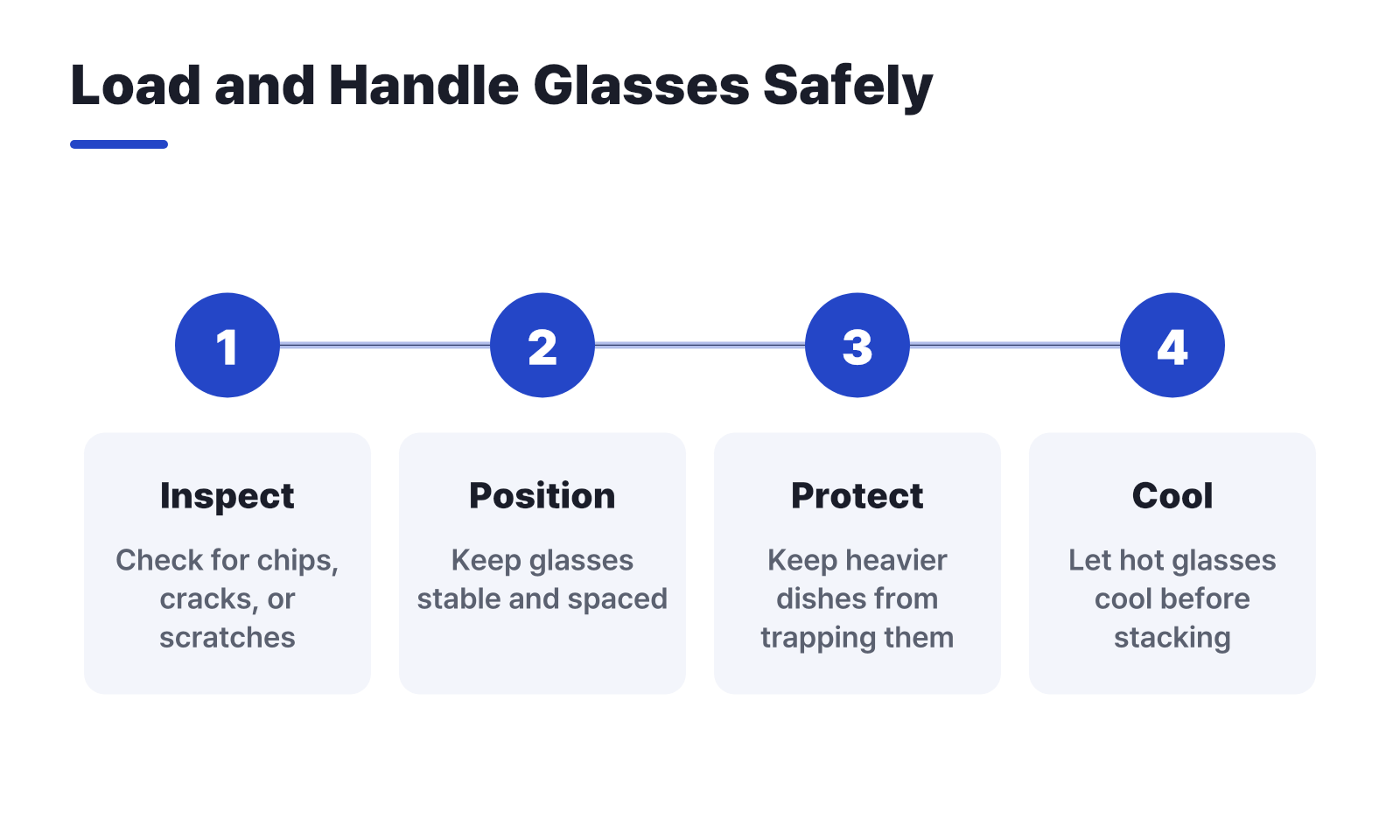
When should you choose air dry instead?
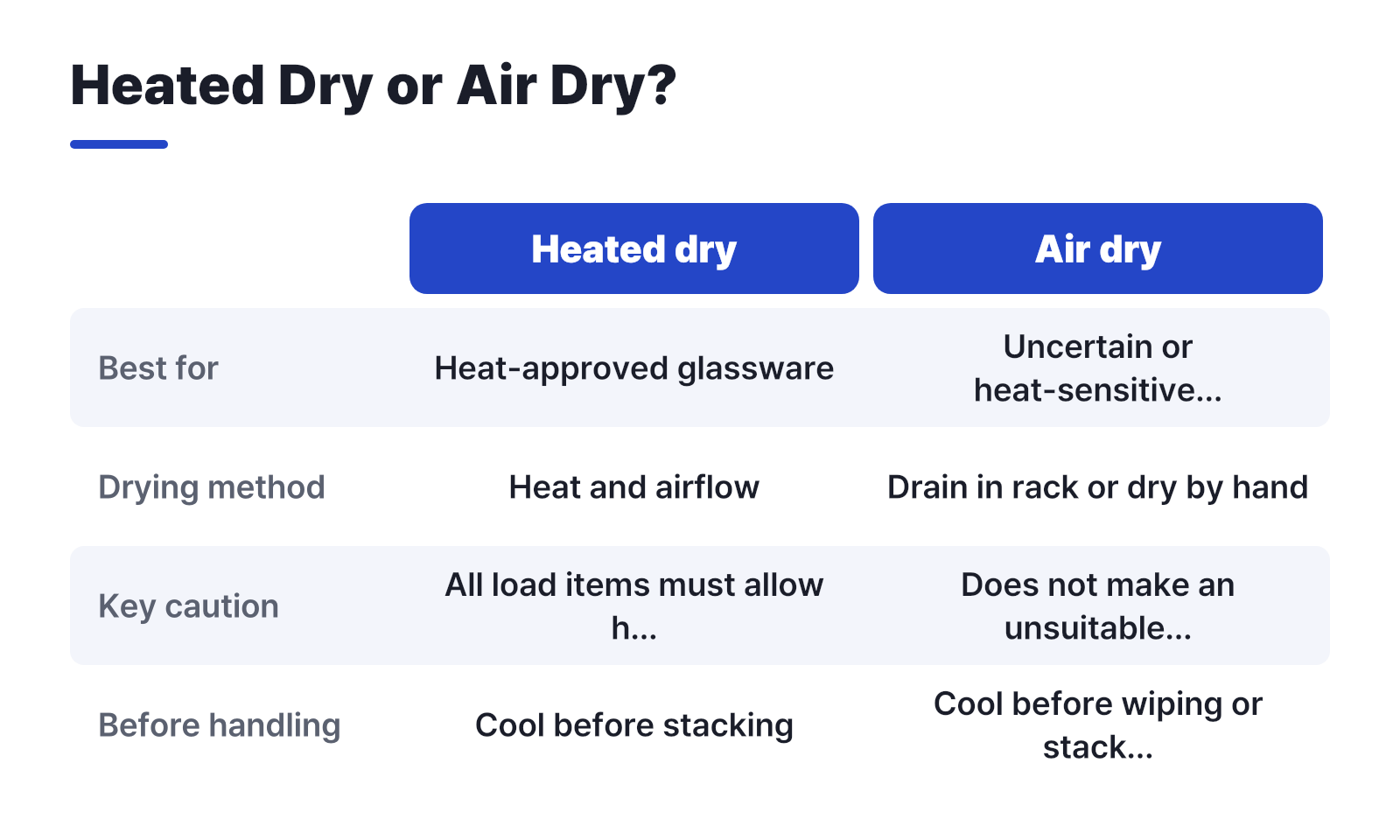
Choose air dry when a glass is marked not dishwasher-safe, the maker advises against heated drying, or its care instructions are uncertain. Air drying also makes sense when the load contains delicate plastics, insulated mugs, wooden utensils, or decorated items whose finishes may be affected by heat.
Air dry takes away the added heat, but it does not make an unsuitable glass dishwasher-safe. Use the glassmaker’s washing directions first. If machine washing is approved but the heated setting is not, select a non-heated drying option and remove the glasses carefully when the cycle ends.
To finish drying without heated dry, leave space between glasses and let them drain in the rack. If you need them for serving, use a clean, dry cloth to remove remaining water once the glasses are cool enough to handle. Avoid rubbing a hot glass or stacking glasses while warm; cooling first reduces the chance of scratches and sticking.
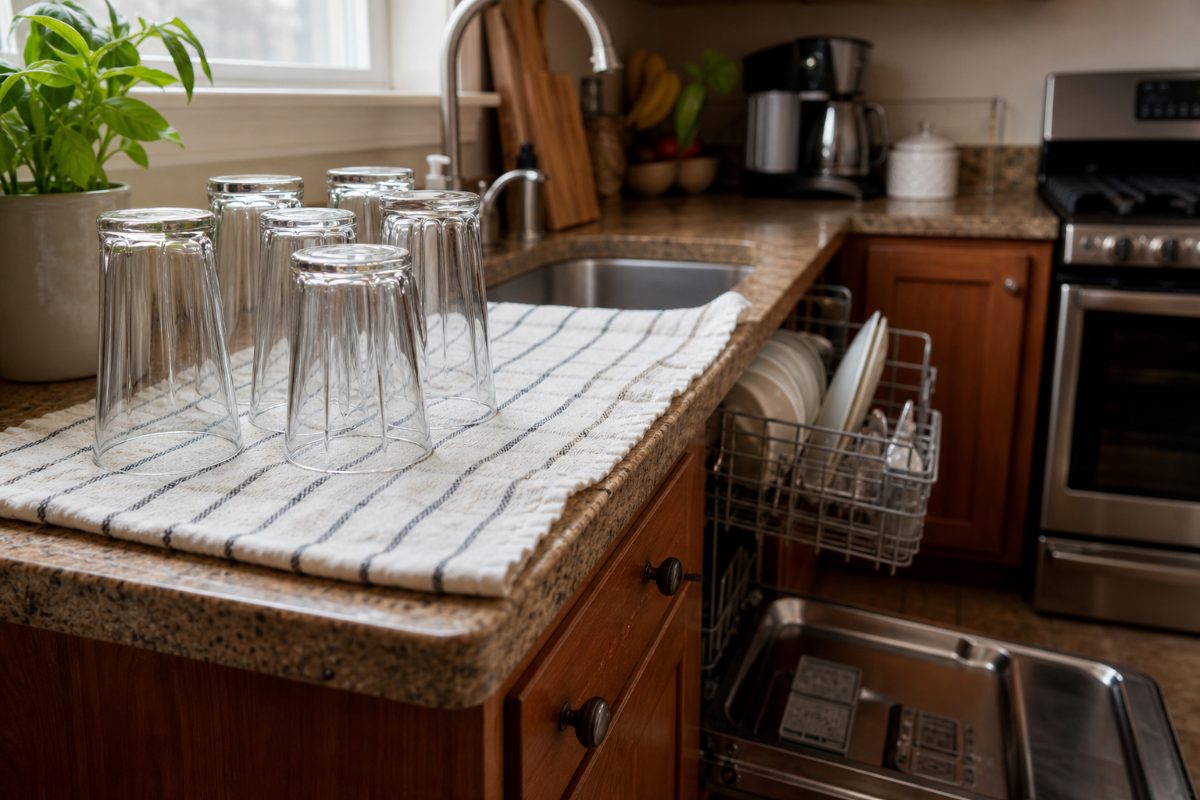
With heated dry off, glasses can drain in the dishwasher rack or be dried by hand after they cool.
What should you do if glasses are still wet or spotted?
Wet glasses and spotted glasses call for different checks. Heated dry and rinse aid can help water evaporate and drain, but a glass that remains damp points to a drying issue, while visible marks call for attention to droplets and mineral residue.
| What you see | What to try | Why it helps |
|---|---|---|
| Droplets remain after the cycle | Use heated dry only if the glass and the other load items allow it; use rinse aid according to its label and your dishwasher manual. | Heat speeds evaporation, while rinse aid helps water sheet off surfaces. |
| Clear glass has spots after drying | Check the rinse-aid dispenser and use the dishwasher’s rinse-aid guidance. | Rinse aid reduces water beading, which can leave droplets sitting on glass. |
| A glass has a mark that does not change with cleaning | Compare it with another glass and inspect the surface carefully. | A removable deposit and lasting surface damage are different possibilities; a mark alone does not establish a dishwasher fault. |
Follow the rinse-aid product label and dishwasher use-and-care guide rather than adding more product by guesswork. If a glass’s surface looks scratched, cloudy, or otherwise changed, stop treating every mark as a drying spot; check the glassmaker’s care instructions before another wash.
For a holiday batch, make the setting decision before starting the cycle: read the care directions for the glasses, keep uncertain or heat-sensitive items out of heated dry, and use heated dry for the remaining load only when the dishwasher’s instructions and every included item allow it. That approach gives heat-tolerant glassware the faster drying benefit without asking an unfamiliar glass to tolerate a setting its maker has not approved.
References
- Glass Kitchenware Cautions • AnswerLine • Iowa State University Extension and Outreach
- Using a Heated Dry Cycle - Product Help | KitchenAid
- The 16 Best Drinking Glasses | Reviews by Wirecutter
Information in this post was checked as of November 2026. Policies and prices may change, so please verify important details with official sources.
Comments
Post a Comment