
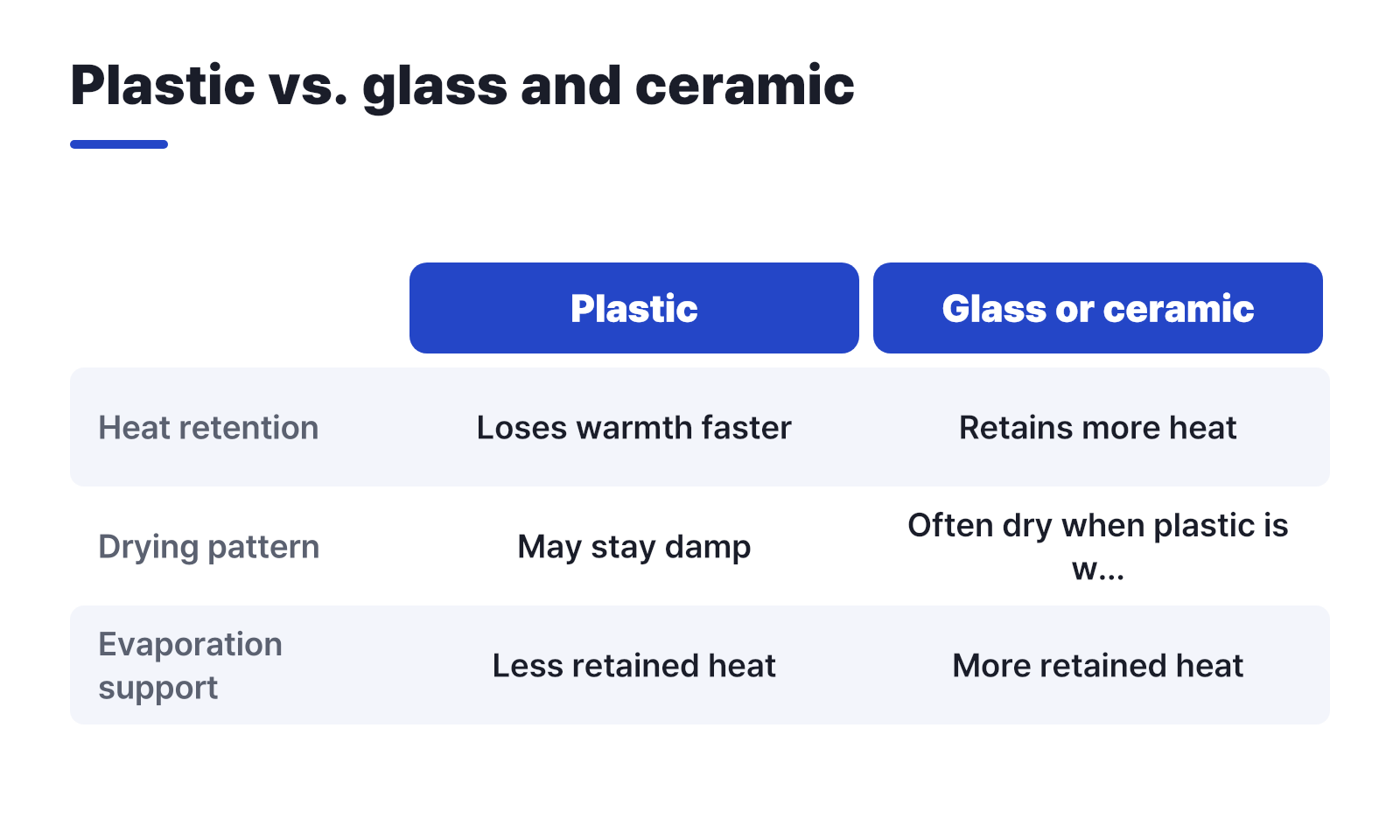
Plastic containers can come out wet after a dishwasher’s heated-dry cycle because plastic cools faster than glass or ceramic, leaving less retained heat to evaporate moisture. Water also tends to bead on plastic and collect in container shapes, so a damp plastic load can be normal even when other dishes are dry.
Contents
- Why heated dry can leave plastic wet
- How container shape and surface affect drying
- What to adjust first
- When wet dishes may point to a dishwasher issue
Why can heated dry leave plastic containers wet?
Heated dry adds heat after washing, but plastic containers still lose warmth faster than glass and ceramic. Many dishwashers also use heat retained from the final hot rinse to help moisture evaporate and condense on cooler interior surfaces; plastic contributes less retained heat to that process.
That difference explains a common pattern: plates and glasses feel dry, while lightweight food-storage containers and lids still have droplets. The drying cycle can be working as intended, yet plastic surfaces may not stay warm enough for the same amount of evaporation.
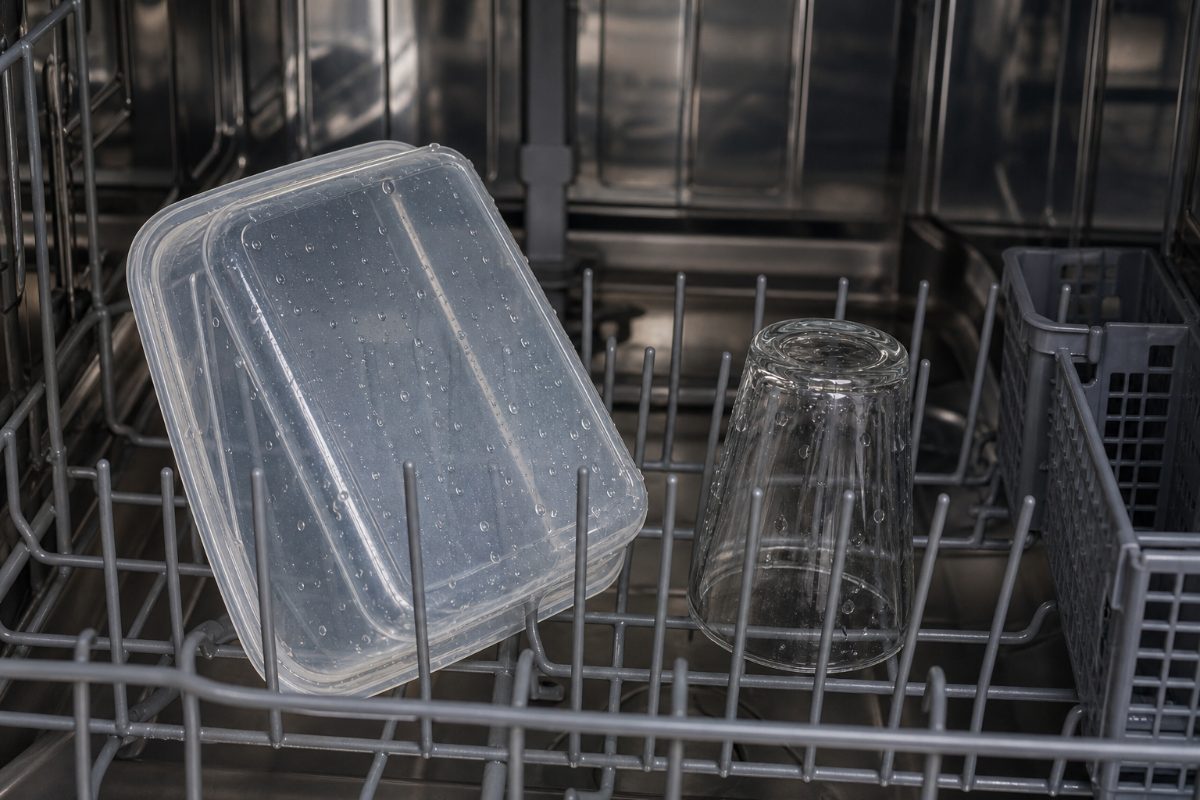
Plastic’s surface can affect the result too. Water tends to bead on plastic rather than spread into a thin film, and beads have less exposed surface area for evaporation. Scratches on older containers can give droplets more places to cling, so two plastic items in the same load may dry differently.
A heated-dry setting is not a promise that every material will finish equally dry. It adds heat, but it cannot make plastic hold heat like glass or ceramic. A few damp containers by themselves are weak evidence of a machine fault.
How do shape and surface keep water on plastic?
Water trapped inside an upright bowl, cup, or food container cannot drain freely, even when the cycle heats the load. Containers nested together can also hold water between their surfaces, while droplets may cling to the plastic instead of running off.
Look at where the moisture sits before changing settings. A puddle inside a container points toward its angle or shape; scattered beads on the outside are more consistent with plastic’s cooling and surface behavior. If only one or two pieces are wet, compare their position and shape with dry items nearby.
| What you see | What to inspect | First adjustment |
|---|---|---|
| Water pooled inside a bowl or container | Whether the opening faces upward or the item sits level | Angle it so water can drain away |
| Moisture between two pieces | Nested or touching cups, lids, or containers | Separate them and leave space between items |
| Droplets on plastic, with glass or ceramic dry | Material and surface, including scratches on older plastic | Test a different placement, then hand-dry any remaining droplets |
| Many kinds of dishes stay wet | Cycle and drying settings, rinse-aid dispenser, and load arrangement | Use the model’s troubleshooting guidance |
The comparison matters: a container that holds water because it faces upward needs a loading change, while droplets across several plastic pieces may persist because of the material. The table is a way to choose a first test, not a diagnosis of a specific dishwasher.
Use only plastic marked as dishwasher-safe, and place it where the owner’s manual recommends. Some dishwasher-safe plastics are directed to the upper rack; the rack position and heat exposure can differ by model, so follow the item’s marking and the appliance manual.
What should you adjust first to improve plastic drying?
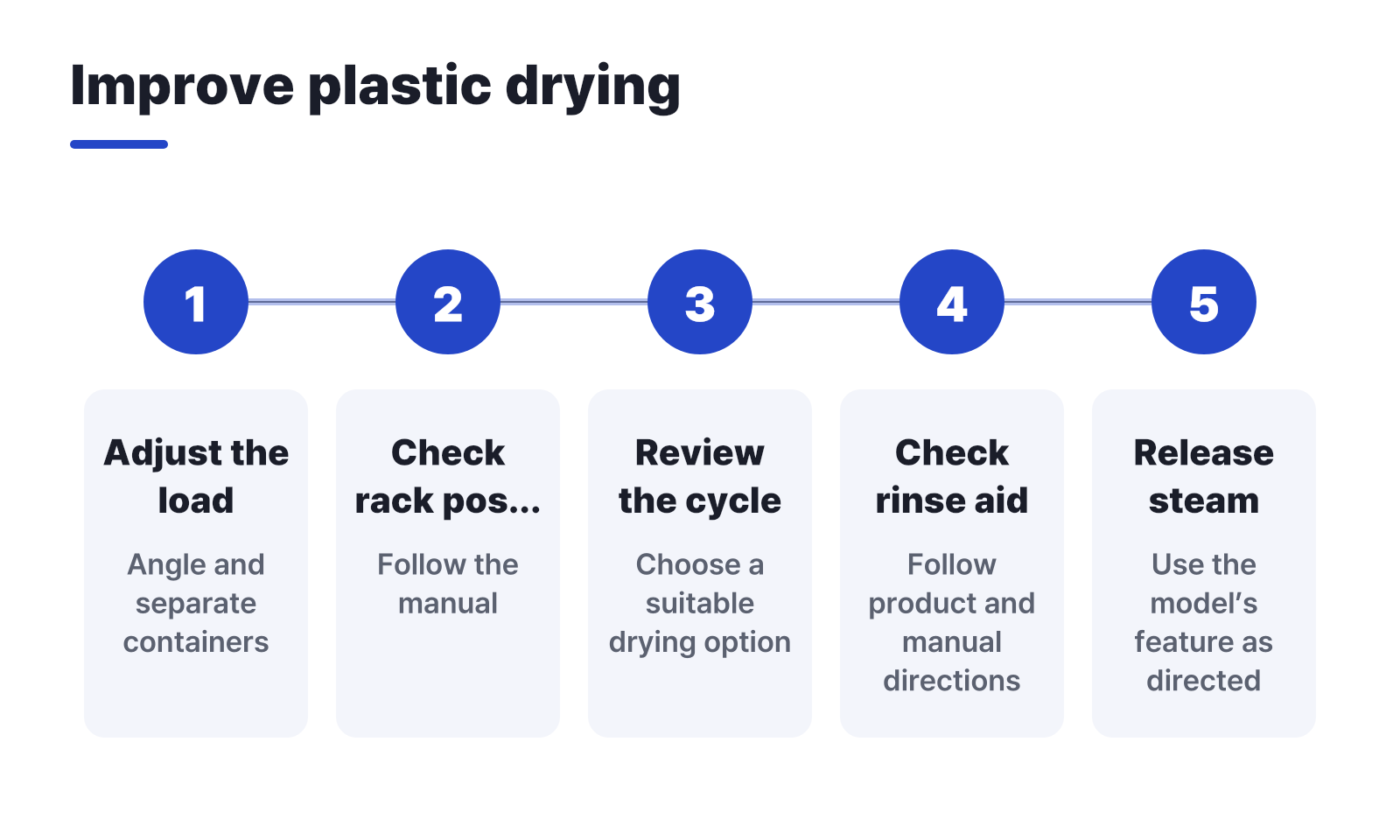
Start with the load, then review drying settings and rinse aid. This order makes it easier to tell whether water is pooling because of placement or remaining as surface droplets; changing several things at once can make the result harder to interpret.
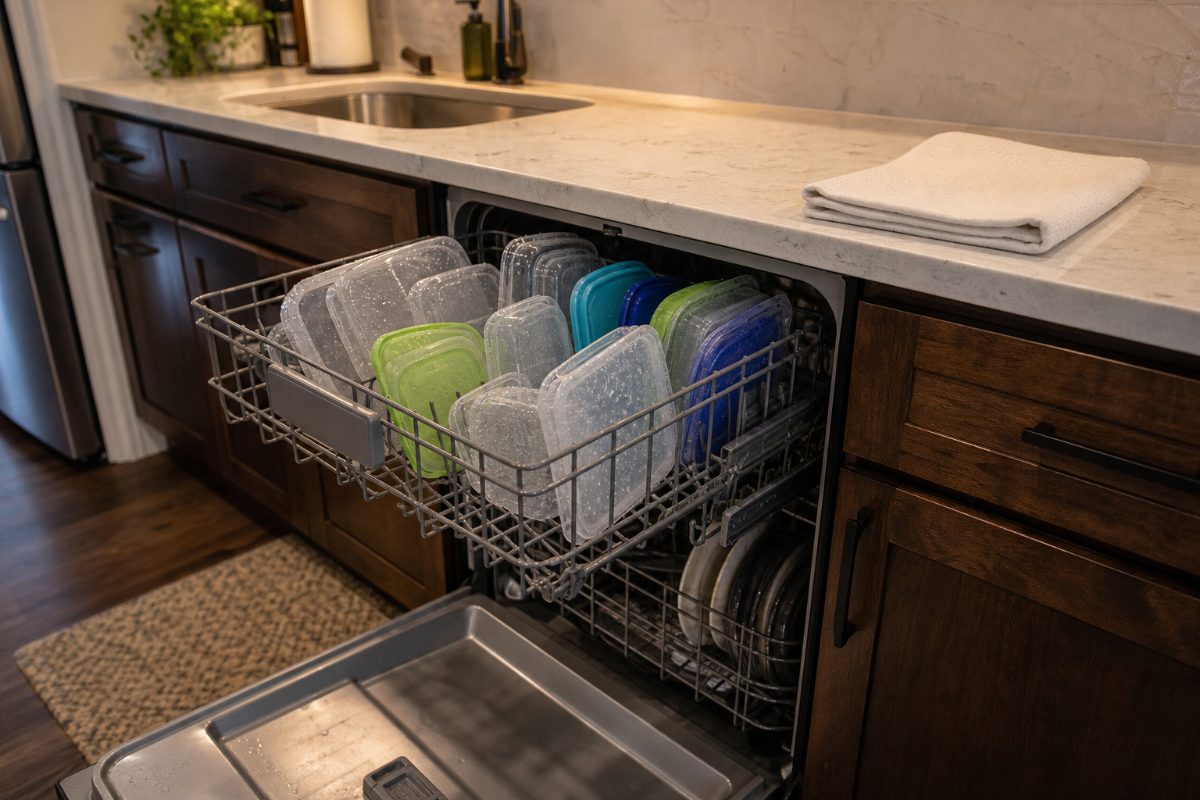
- Reposition the containers. Angle bowls, cups, and containers so water can drain rather than collect inside. Keep pieces from nesting or pressing together, and leave space between them so water can run off.
- Check the recommended rack position. Put plastic items on the rack specified by the dishwasher manual. If the manual recommends the upper rack, use it rather than placing plastic wherever there is open space.
- Review the cycle and drying option. Eco mode may provide less drying performance because it is designed to reduce energy and water use. If the load remains damp, choose a program or drying setting suited to the load, using the options listed in your manual.
- Check rinse aid. Rinse aid lowers water’s surface tension, helping it sheet off dishes instead of staying in clinging droplets. If the dispenser is empty or its setting needs attention, follow the dishwasher manual and the rinse-aid product label. For more on dispenser settings, see Dishwasher Rinse Aid Setting for Holiday Dishes.
- Give steam a way to escape when the model allows it. Some dishwashers use automatic door opening after a cycle to release steam and let fresh air circulate. If your model has that feature, use it as directed; for a manual door-opening option, follow the owner’s manual rather than forcing a setting or door position.
Rinse aid can improve how water runs off, but it does not give plastic the heat retention of glass or ceramic. If the load is otherwise dry and only plastic remains damp, correct placement and draining are the most useful first checks; a towel can finish the containers without another cycle.
When do wet dishes suggest a dishwasher problem?
Plastic alone staying damp, while glass and ceramic dry, often fits the normal difference in how those materials retain heat. If dishes that usually dry well suddenly come out wet too, inspect the selected cycle, drying option, loading, and rinse-aid dispenser, then follow the model’s troubleshooting and maintenance instructions.
Use the pattern across the whole load to decide what to do next. Wet plastic with dry nonplastic dishes points first to material, surface, and placement; moisture on glass, ceramic, and plastic together makes the cycle settings and the dishwasher’s recommended checks more relevant.
Do not infer a failed heating or drying component from a few wet containers. If the manual’s troubleshooting steps do not resolve a broader change in drying, contact the manufacturer or a qualified technician rather than opening or repairing electrical or internal dishwasher parts yourself.
For the next load, change one thing first: angle and separate the plastic containers, then note whether water still pools inside them or only beads on their surfaces. That observation will help you choose between a loading adjustment and a closer review of the cycle and dispenser settings.
References
- Why Your Dishwasher Leaves Dishes Wet: Practical Fixes - TrustDALE
- Best Dishwasher Drying Features | Metro Appliances
- Dishwasher Not Drying? 5 Common Causes And Easy Fixes
- 5 Reasons Your Dishwasher's Not Drying Your Dishes | Albert Lee | Seattle, Tacoma, Bellevue
- Why do plastic containers always come out wet from the dishwasher? Science has the answer
- Which Dishwasher Dries Plastics the Best?
- What things can you put in the dishwasher?
- Why plastic doesn't dry in the dishwasher
Information in this post was checked as of November 2026. Policies and prices may change, so please verify important details with official sources.
Comments
Post a Comment