
To load a dishwasher after Thanksgiving dinner without blocking the spray arms, scrape food from dishes, place large cookware where it cannot obstruct a rack or dispenser, and keep dirty surfaces facing the water spray. Then gently turn each spray arm by hand before starting the cycle. A clear path lets the arms rotate and water reach the dishes.
Table of Contents
What should go in the dishwasher first?
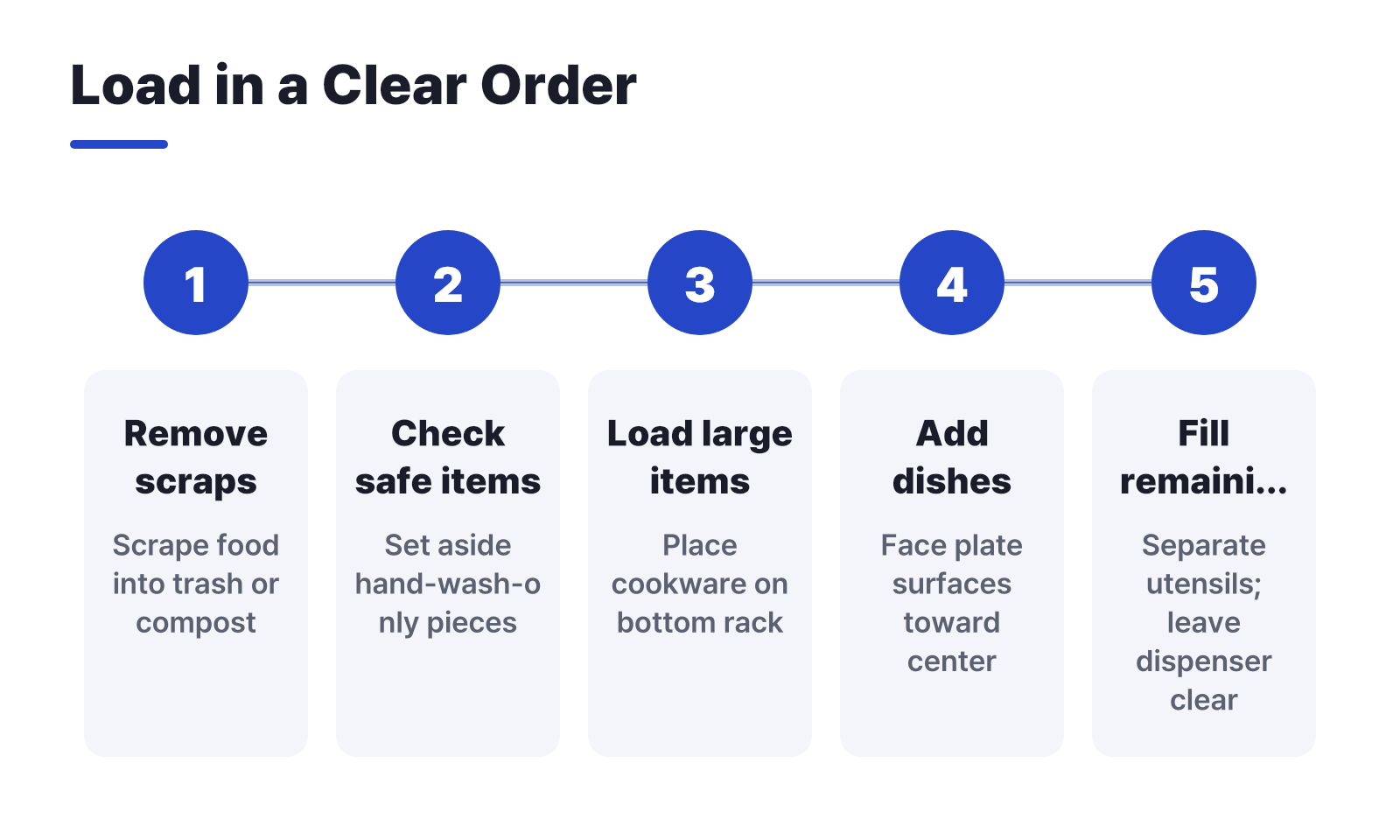
Start with the largest dishwasher-safe items, then fit plates and smaller pieces around them. This order makes it easier to spot a tall pan, platter, or handle that could block a spray arm before the racks are full.
Scrape leftover food into the trash or compost before loading. Scraping removes chunks that could interfere with cleaning while avoiding an unnecessary pre-rinse. Keep this step simple; the goal is to remove scraps, not to wash each dish at the sink.
- Set aside anything that is not labeled dishwasher-safe or is listed as hand-wash-only in the item or dishwasher instructions.
- Place large pots, pans, casserole dishes, and serving platters in the bottom rack, where the larger items generally belong.
- Add dinner plates between the rack tines, with their dirty surfaces facing the center of the dishwasher.
- Fill the upper rack with cups, glasses, bowls, and dishwasher-safe plastics, leaving room for water to reach their surfaces.
- Load silverware so pieces are separated rather than nested together, and leave the detergent dispenser unobstructed.
Thanksgiving serving pieces can be awkward even when they fit inside the tub. A platter that rests across several rows or a pan that crowds the rack can shield dishes from the spray. If an item forces other dishes into a tight stack, remove it and wash it separately rather than sacrificing the open spaces water needs.
How to arrange plates, pans, and platters on the bottom rack
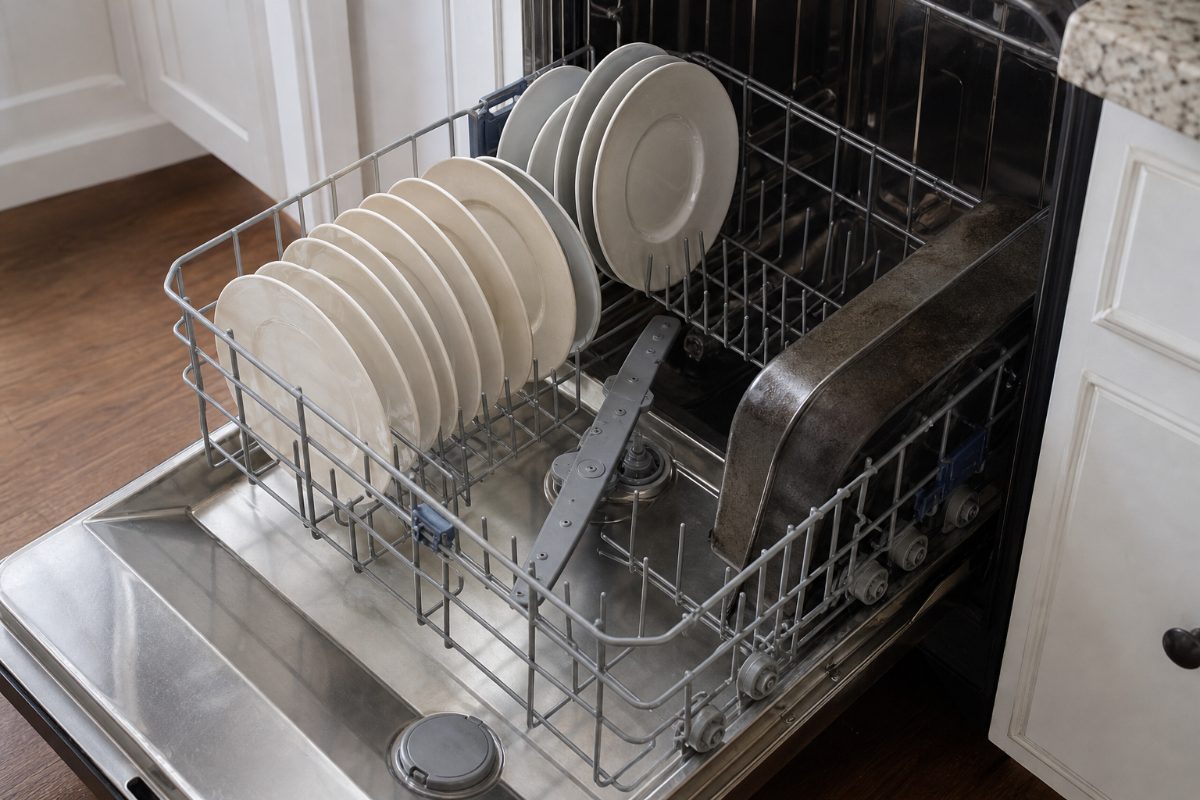
Put plates between the bottom-rack tines and aim their dirty sides toward the dishwasher’s center. Place large pans and platters along the sides or back when that position leaves the spray arm and detergent dispenser clear; angle cookware so its dirty surfaces can receive the spray.
Keep plates upright and spaced rather than laying one over another. When two dishes touch or overlap, water may not reach the covered area. Leave gaps between pieces, especially where a serving platter or roasting pan takes up more space than an everyday plate.
Check the height and shape of cookware as well as its footprint. A pot handle can extend into the path of a spray arm, and a lid can sit at an angle that prevents rotation. Turn handles inward or reposition the item if they intrude into the arm’s path, while keeping the manufacturer’s loading directions in mind because rack and arm layouts differ among dishwashers.
Do not force an oversized platter into a position that blocks other dishes or the dispenser door. If the dispenser door cannot open freely, detergent may not be released as intended. Reposition the platter, move it to another suitable spot, or leave it out for a separate wash.
A useful loading test is to look from above before adding smaller pieces. The spray arms should have open space to turn, and the largest objects should not form a wall between the water source and the rest of the load. Physical fit alone is not a good measure of usable capacity.
Where should glasses, bowls, utensils, and plastics go?
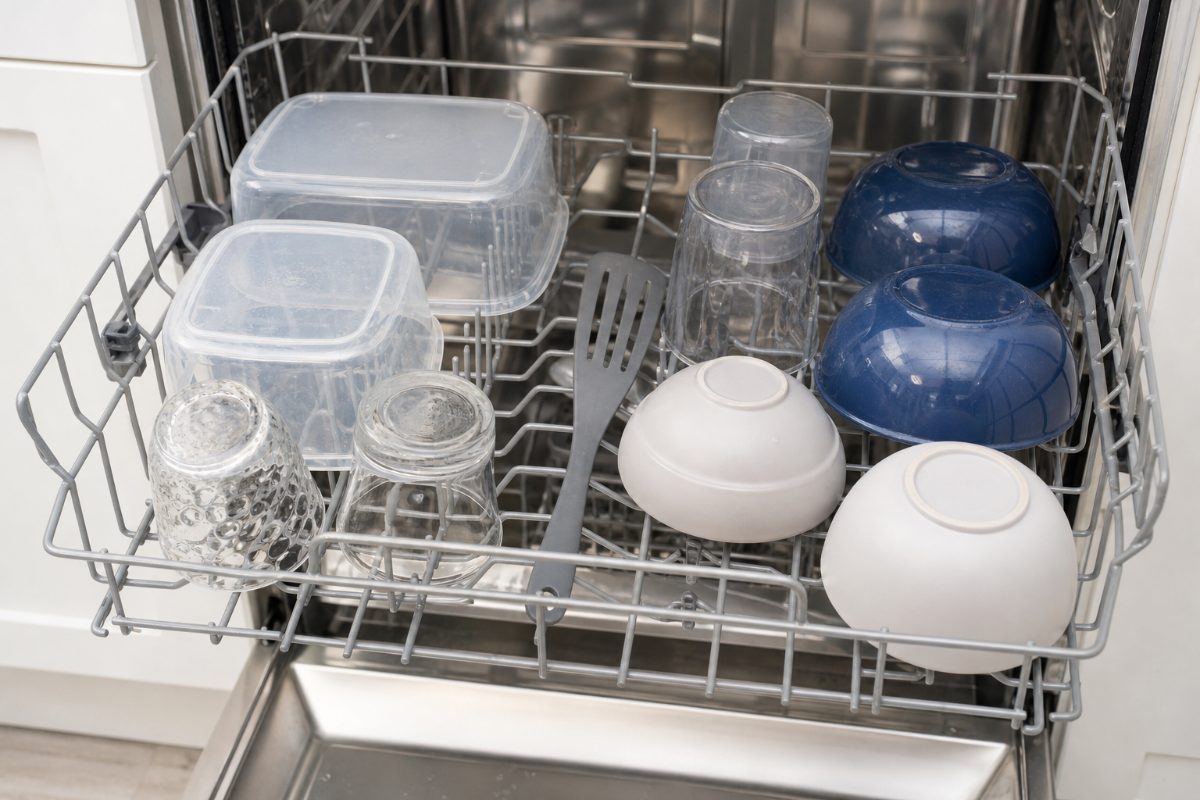
Place glasses, cups, bowls, and dishwasher-safe plastics on the upper rack, with openings positioned so water can reach the interior. Keep bowls from nesting together, and secure plastic items so they cannot slip through the rack or fall into a spray arm’s path.
Put cups and glasses between the rack supports instead of balancing them against one another. A crowded row can leave surfaces shielded, while a stable position helps prevent items from shifting during the wash. Arrange bowls with space around them; nested bowls can trap food and block the spray from the surfaces inside.
Plastic belongs on the upper rack because it is farther from the heating element at the bottom of the dishwasher. Make sure each plastic item sits securely and is not small enough to pass through the rack gaps. A loose item can fall and obstruct a spray arm or land on the heating element.
Separate silverware in the utensil basket so spoons and forks do not pack together. When pieces nest, water has less access to the surfaces between them. If the dishwasher has a third rack, small utensils and flat items can go there; otherwise, use the designated utensil area without letting long pieces extend into the arms’ rotation paths.
Long spatulas or ladles can lie flat on the upper rack if they stay inside the rack and cannot block a spray arm. Before starting, look for handles that extend below or across the rack. The shape and position matter more than whether the utensil seems to fit at first glance.
How to check that the spray arms can turn
A spray arm is the rotating dishwasher part with water jets that wash and rinse the dishes. After loading, gently spin each arm by hand and watch for contact with a plate, pan, utensil, or rack. If an arm catches or stops against an item, move the item and test the arm again.
Check both the bottom and upper racks if your dishwasher has more than one spray arm. A tall pot, a platter edge, or a long utensil can interfere with a different arm depending on the model. Open the door fully, inspect the rack areas, and rotate each arm gently through its available travel.
Next, confirm that the detergent dispenser is not covered by a plate, pan, or handle. The dispenser needs a clear path to open during the wash. Moving one large item may solve both problems if it is crowding the dispenser and blocking an arm.
Use this quick pre-start check:
- Dirty surfaces face open space rather than another dish.
- Plates and bowls are separated, not wedged or nested.
- Large cookware does not cross a spray arm’s path.
- Long utensils and loose plastics stay inside their racks.
- Each spray arm turns gently without hitting an item.
- The detergent dispenser is clear.
If an arm turns freely but dishes still come out dirty, rearrange items so the water can reach their surfaces and avoid overloading the racks. A poor cleaning result by itself does not identify a specific dishwasher fault. For cleaning the filter or spray-arm openings, follow the dishwasher’s instructions rather than taking apart internal components.
Which cycle should you use for a holiday load?
Choose a cycle based on how heavily soiled the dishes are and the instructions for your dishwasher. A load with heavily soiled cookware may call for a different setting than a load of lightly soiled plates and glasses, so the Thanksgiving menu alone does not determine the right cycle.
First make sure the load is arranged so dishes are exposed to the spray. A heavier cycle cannot correct a blocked arm or a stack of nested bowls. Match the setting to the soil level after confirming that cookware, plates, and utensils leave the water paths open.
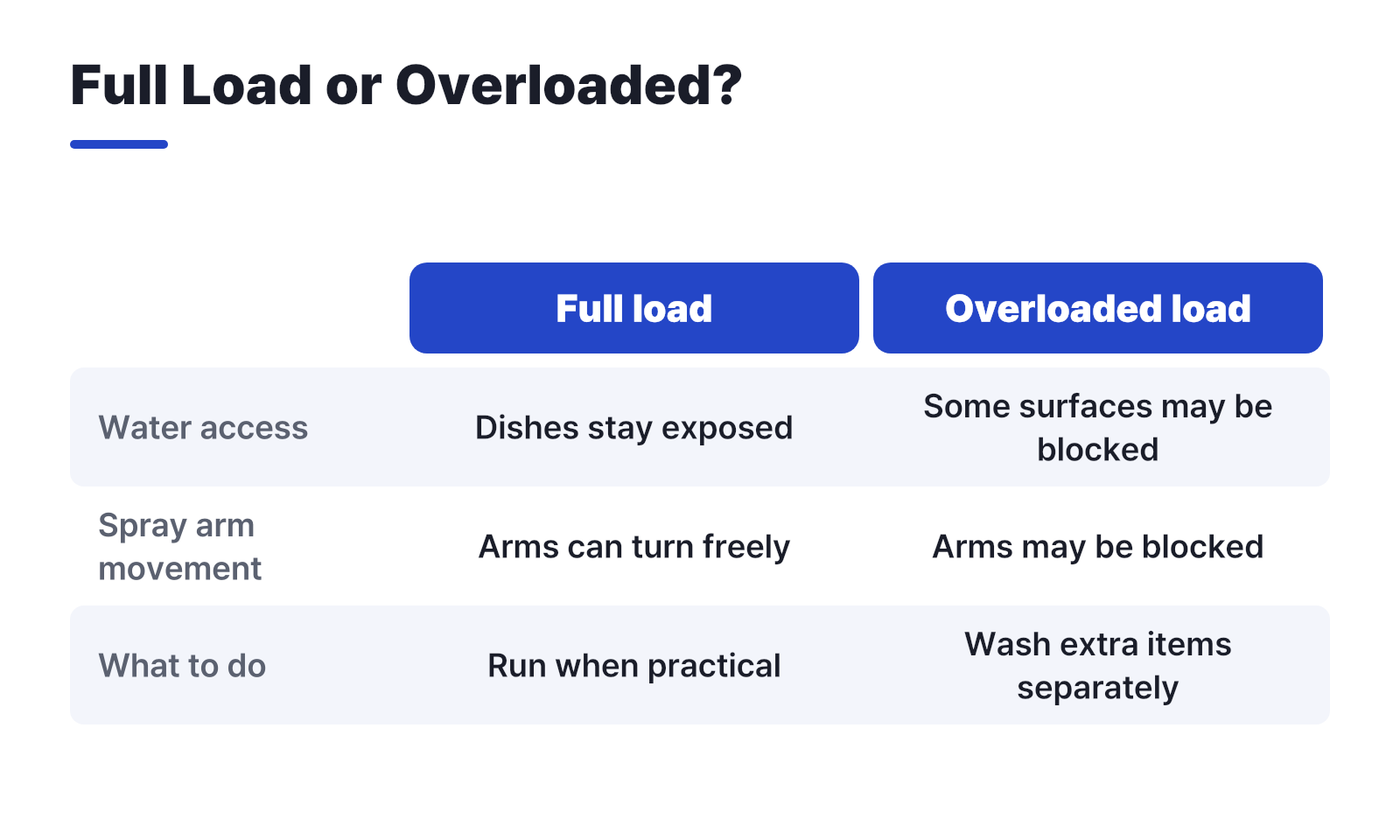
Run the dishwasher with a full load when practical, but do not keep adding items once the racks are crowded or the spray arms cannot turn. A full load uses the available space; an overloaded one prevents water from reaching some surfaces. If the remaining serving dishes do not fit with clear spacing, wash them in another load.
For a large post-dinner load, take one final look at the racks with the door open: turn the arms gently, confirm the detergent door is free, and remove any item that shifts into the arms’ path. Then select the cycle that fits the soil level and your dishwasher’s instructions.
References
- Dishwasher Problems After Thanksgiving Dinner: What to Check Before the Big Cleanup - Appliance Cowboys
- Thanksgiving Countdown: Get Your Dishwasher Ready for the Busiest Cook – CLYND
- Guide to Properly Loading Your Dishwasher
- How to Load a Dishwasher Properly | Whirlpool
- What is the Best Way to Load a Dishwasher?
- NF97-333 Making Decisions: Buying a Dishwasher - UNL Digital ...
- Load It Right: The Checklist That Changes How Your Dishwasher Performs | Plaza TV & Appliance
- ENERGY SERIES: What about Dishwashers? | VCE Publications | Virginia Tech
Information in this post was checked as of November 2026. Policies and prices may change, so please verify important details with official sources.
Comments
Post a Comment