Table of Contents
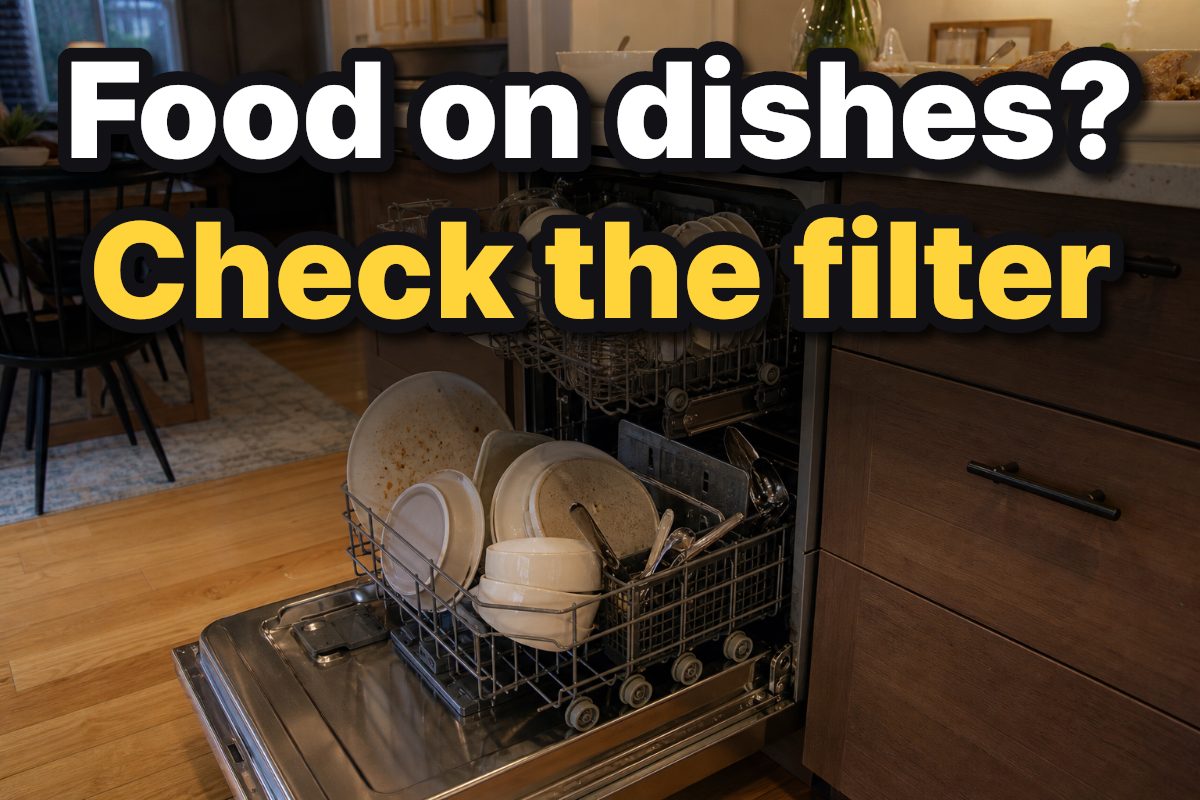
When a dishwasher leaves food particles after a large holiday meal, start with the filter and the spray arms, then look for dishes packed so tightly that water cannot reach their surfaces. A sudden load of heavily soiled plates can expose a filter that needs cleaning or a blocked spray hole, so check those areas before changing detergent or assuming the appliance needs repair.
Why does a dishwasher leave food after a large meal?
A dishwasher can leave food behind when debris collects in its filter, spray-arm holes are blocked, or the load prevents wash water from reaching a dish. The filter catches food particles, while the spray arms distribute water through small openings. If either part is obstructed, residue can remain or land on other dishes.
Dishwashers reuse wash water during the cycle. Food caught by the filter is kept out of that water path; when the filter is dirty, small particles can recirculate and settle on plates, bowls, or glasses. A busy holiday load can make an existing maintenance issue easier to spot because more food soil enters the machine at once.
Look at the residue before cleaning anything. Soft scraps or grit point toward food debris; a white or cloudy film is a different kind of mark and may involve minerals or glass damage. For that separate problem, see Cloudy Glasses: Hard-Water Film or Permanent Etching?
What should you check first after the cycle?
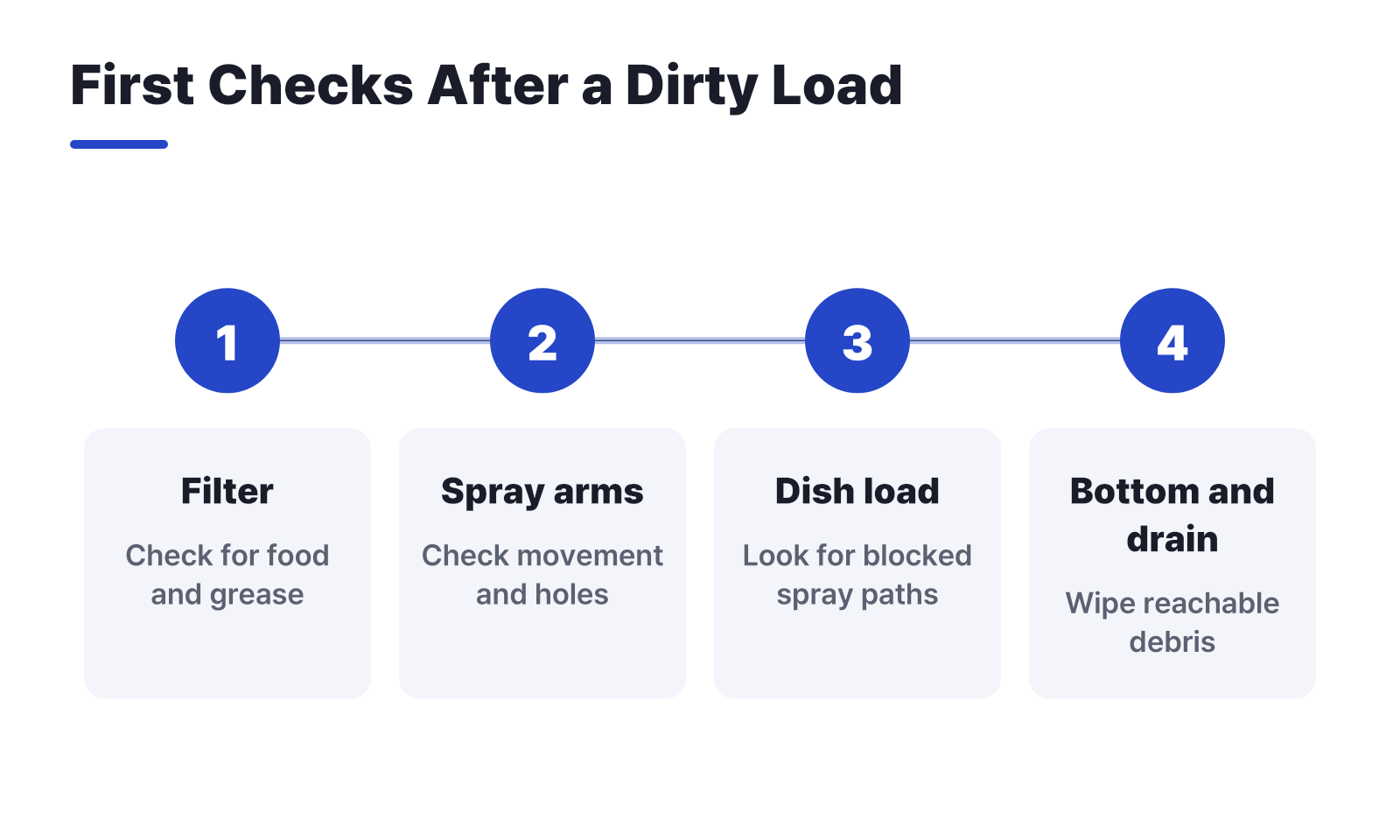
Check the filter and the spray arms first, then inspect how the largest dishes were loaded. These checks focus on the parts that trap debris and move water, and they do not require guessing at a mechanical fault. Use your dishwasher’s owner’s manual for the filter’s location and removal steps because designs differ.
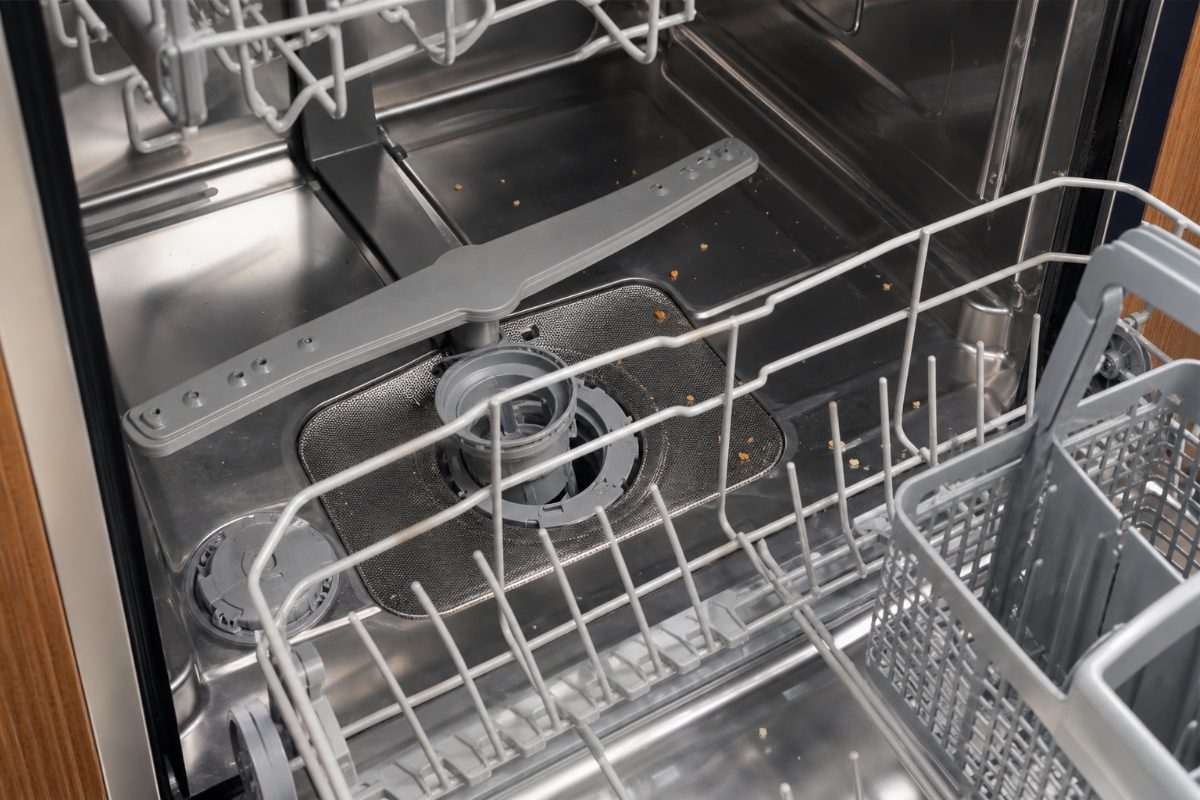
- Look at the filter. Find it at the bottom of the dishwasher and check for a mat of food, grease, or debris. A filter filled with residue can interfere with cleaning and allow particles to return to the wash water.
- Inspect the spray arms. Check whether each arm can move freely and whether food is lodged in its holes. Clogged openings reduce the spray reaching the dishes. Follow the owner’s manual for removing or cleaning an arm; do not force a part that is not designed to come off.
- Check the load. Look for large plates, serving dishes, or bowls positioned where they block the spray from reaching other items. Dishes pressed close together can also leave surfaces shielded from water and detergent.
- Look around the bottom and drain area. If food debris remains there, wipe reachable surfaces with a damp cloth. Stop if clearing debris requires opening a pump or reaching into an uncertain internal area.
A filter that looks clean does not rule out a spray-arm obstruction, and a clear spray arm does not rule out poor loading. Checking both helps distinguish a maintenance issue from a one-time arrangement problem.
How to clean the filter and spray arms safely
Remove and clean the filter only as your model’s manual directs. A dishwasher filter traps food before it can obstruct the pump or return to dishes, but the way it unlocks and the cleaning method depend on the appliance. Put the filter back in its specified position before running another load.
For a removable filter, clear the trapped debris and rinse or wash it using the method in the owner’s manual. Avoid substituting a generic removal or reassembly procedure: a filter that is not seated as intended may not do its job. If the filter cannot be removed, wipe reachable interior surfaces and the drain area with a wet dishcloth, as described for that type of dishwasher.
Inspect the spray-arm openings for visible food and make sure the arms rotate smoothly. A clogged hole can reduce cleaning performance even when the rest of the machine looks normal. Clean the nozzles using the method approved for your model. Some manufacturer instructions specify particular cleaning steps, so do not assume that a method for one dishwasher applies to another.
After cleaning, run a normal load and see whether the particles return. If the filter and reachable debris are clear but food remains, note which dishes are affected and whether the spray arms were blocked by the arrangement. That observation can help narrow the next check without treating one dirty load as proof of a failed component.
How to load a large, heavily soiled batch
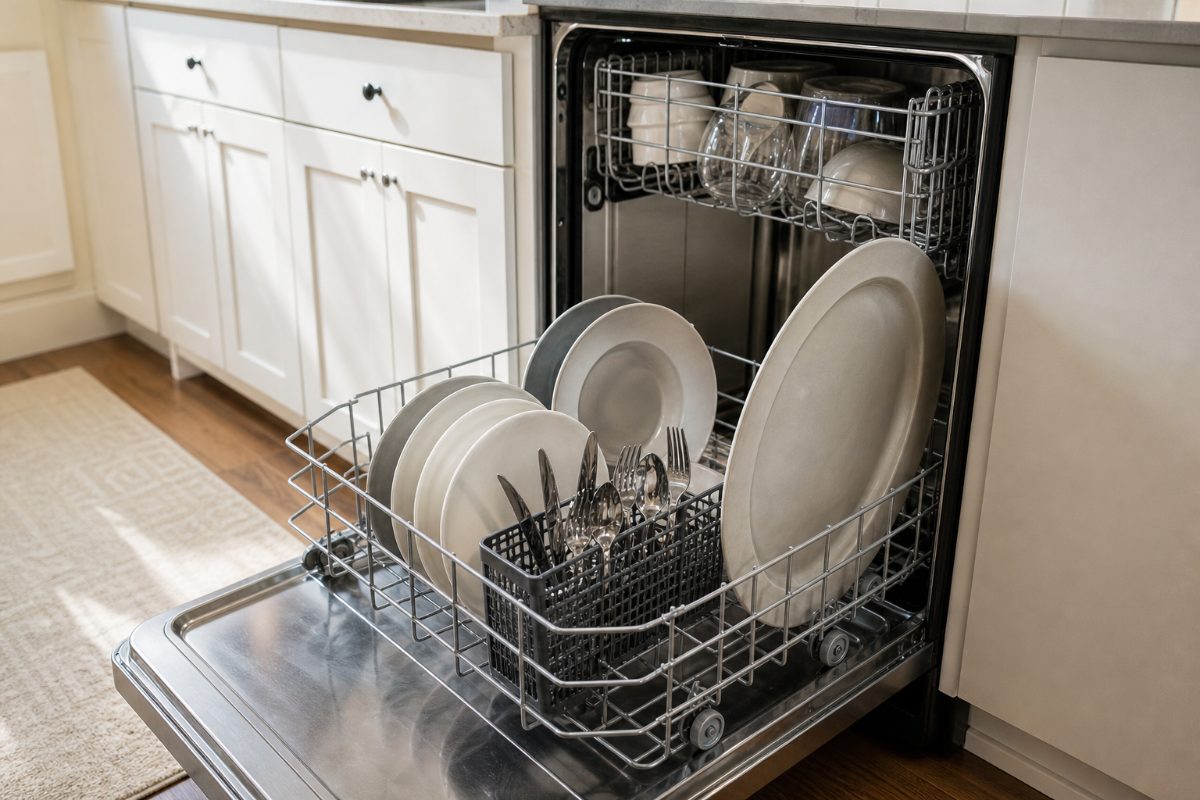
Arrange dishes so water can reach the surfaces that need cleaning, and avoid packing the racks tightly. Large serving pieces can cast a broad obstruction across nearby items; placing them where they do not shield other dishes gives the spray a clearer path. Use the rack layout and loading guidance in the owner’s manual for your model.
Scrape off large scraps before loading, especially after a meal with substantial leftovers. A full pre-rinse is not the same as removing bulky debris: dishwasher detergent enzymes work on food soil, while large pieces can add to what the filter must catch. A practical approach is to remove the pieces that could collect in the filter or drain area and leave ordinary food residue for the wash cycle.
Do not treat an extra-full rack as a reason to add more detergent automatically. Use the detergent type and amount stated on the product label and dishwasher manual. The aim is to let detergent and wash water reach the soil; additional detergent cannot make up for a blocked spray path or a filter loaded with debris.
Choose a cycle suited to the soil and load using the options named in your dishwasher manual. If the meal left dried or substantial food soil, use the cycle guidance for that level of soil rather than assuming a quick cycle will remove it. Cycle names and options differ, so rely on the settings available on your appliance instead of a universal cycle recommendation.
What to do if food particles keep coming back
If food remains after you have cleaned the filter, checked the spray arms, and left room for water to reach the dishes, repeat the next load with those conditions controlled. A repeatable pattern is more useful than a single result: note whether particles appear throughout the load or only on items behind a large dish, and whether debris is still visible near the filter after the cycle.
Clean the filter regularly according to the manual, especially after a meal that leaves substantial scraps. Food residue can also collect around the dishwasher’s interior and door seal, so wipe reachable areas when they are visibly dirty. If a filter is not removable, clean only the surfaces you can safely reach and use the manual’s instructions for running an empty cleaning cycle, if applicable.
Stop troubleshooting if the filter will not fit back correctly, the spray arms cannot move as intended, or clearing debris would require internal electrical or plumbing work. Contact the manufacturer or a qualified appliance technician for that kind of inspection. For the next full load, begin with a clear filter, unobstructed spray arms, scraped plates, and enough space for water to reach each item.
References
- Routine and deep clean your Samsung dishwasher
- How to Use Your Dishwasher Better | Reviews by Wirecutter
- Smarter: What If You Never Cleaned Your Dishwasher Filter? - Consumer Reports
- How to clean a dishwasher filter | Finish® US
- How to clean your dishwasher filter | Bosch
- Why Your Dishwasher Leaves Residue on Dishes (And How to Fix It) - Appliance Parts Group
Information in this post was checked as of November 2026. Policies and prices may change, so please verify important details with official sources.
Comments
Post a Comment