
Table of Contents
Yes, you can plan consecutive dishwasher cycles during holiday hosting if your owner’s manual does not set a limit and the machine is operating normally. There is no universal pause time to build into every schedule. Before starting another load, unload or rearrange dishes, use detergent as directed, and pause the plan if you notice a leak or a change in how the dishwasher runs.
Can you run a dishwasher back-to-back?
Back-to-back dishwasher cycles can be part of a holiday cleanup plan. A dishwasher is an appliance that uses water and detergent to wash and rinse dishes, and some models include a drying process; the owner’s manual is the right guide for your specific machine’s cycles and operating instructions.
Do not assume every model has the same recommended cycle sequence or restrictions. If the manual gives instructions about repeated cycles, follow those. If it does not, focus on whether the dishwasher finishes a cycle normally and whether you see any sign of a problem before starting another.
For a busy meal, plan the next load around what is actually ready to wash. Large serving dishes may need to wait until plates and utensils are clean, or you may need to handwash an item that does not fit the dishwasher’s instructions. A short pause to unload and reload gives you a chance to make room and check the racks rather than pushing dishes into an unsuitable arrangement.
How should you prepare the next load?
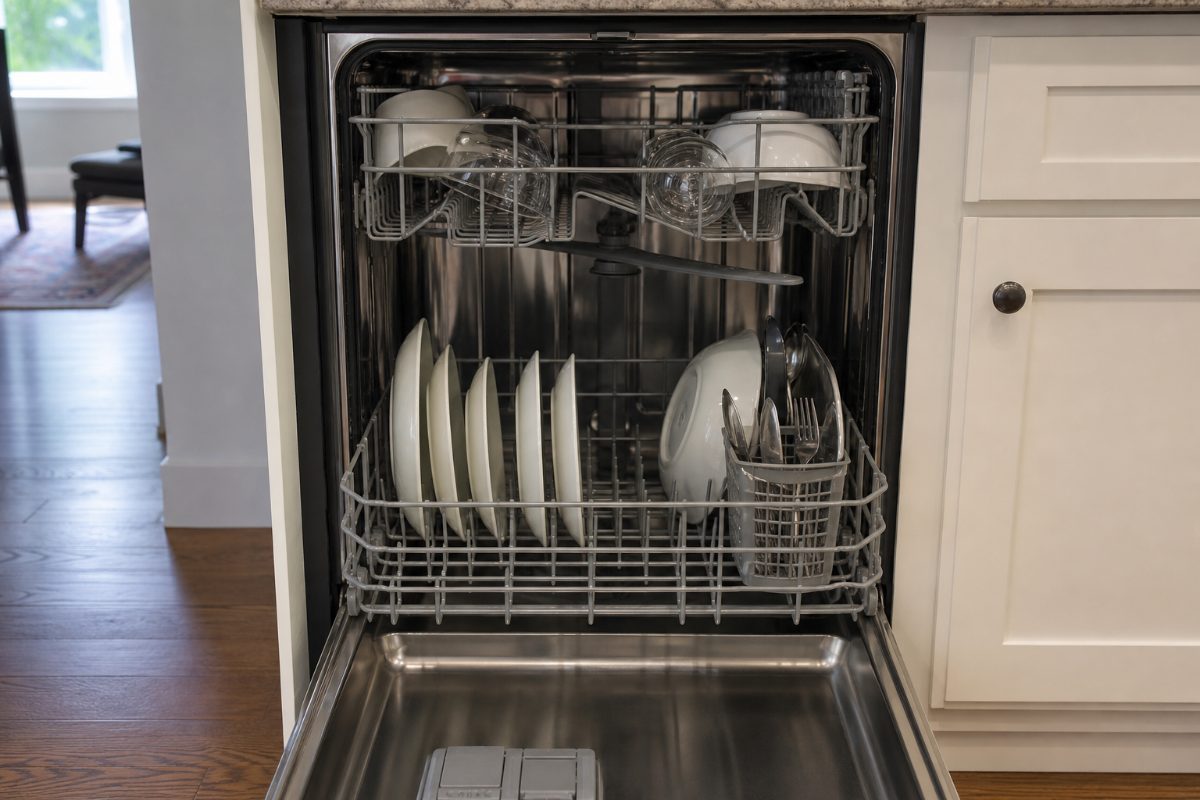
Before a second cycle, follow the loading diagram in your dishwasher manual and make sure dishes sit securely without blocking the spray arms. Correct spacing gives wash water a path around the load; overcrowding can leave items poorly positioned for cleaning, even if the dishwasher completes its cycle.
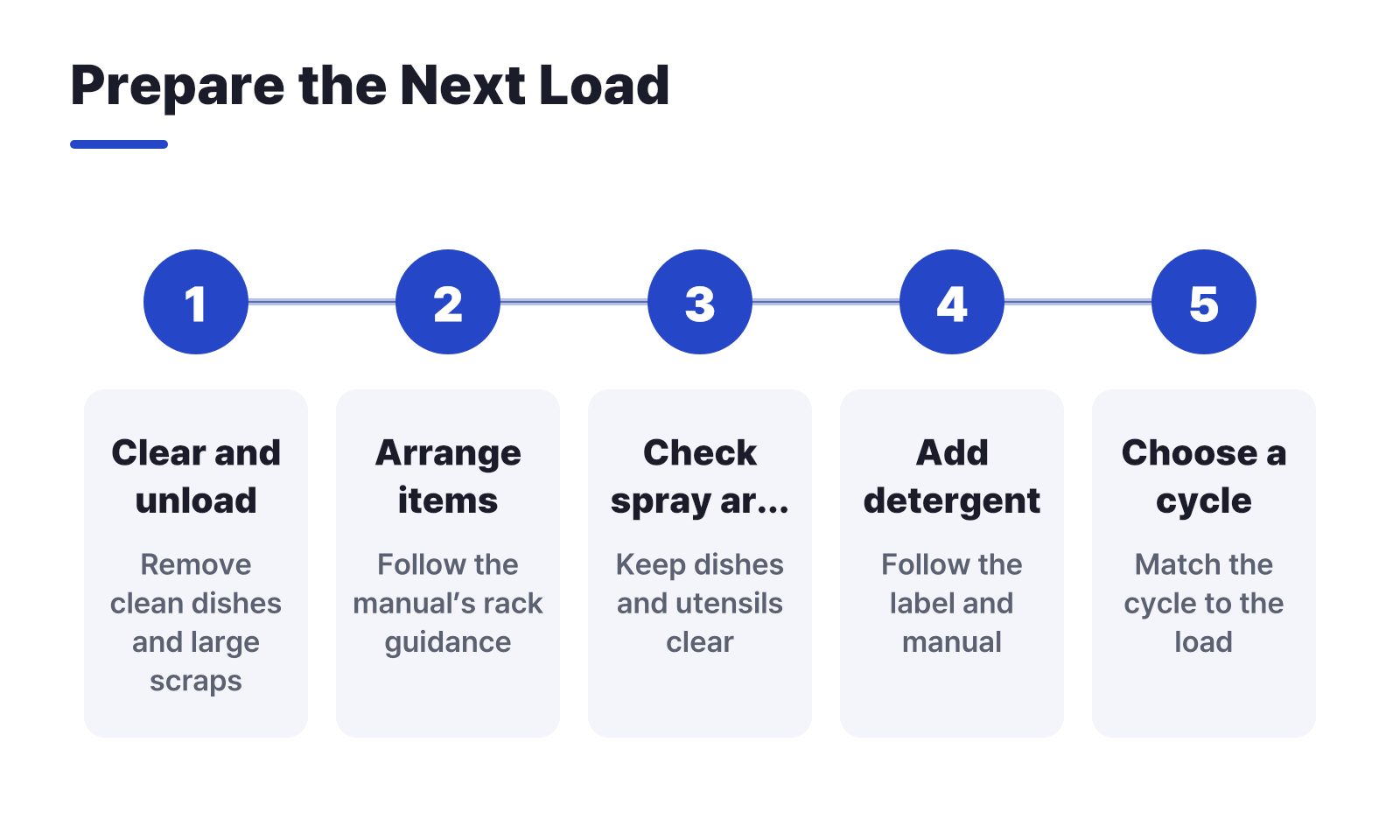
- Unload clean dishes that are in the way, then remove large scraps from the next load.
- Arrange plates, bowls, glasses, and utensils according to the rack guidance in the manual. Keep items from nesting tightly together.
- Check that dishes or long utensils do not obstruct the spray arms. If the manual explains how to check arm movement, use that procedure.
- Add dishwasher detergent following both the detergent label and the appliance manual. Do not guess at an extra dose because the load is large.
- Select a cycle suited to the load, using the options and descriptions provided for your model.
A University of Texas at Dallas housing handbook recommends running full loads and allowing dishes to air-dry. For holiday use, that is a useful efficiency-minded target: wait for a reasonably full load when the dishes can be held safely, but do not cram in items that block the spray arms or conflict with the manual’s loading directions.
Detergent and rinse-aid instructions matter when the kitchen is busy. Use each product only as its label and the dishwasher manual direct. Adding more detergent or combining products is not a shortcut for a crowded load or a disappointing cleaning result.
Should you run a partial load or wait?
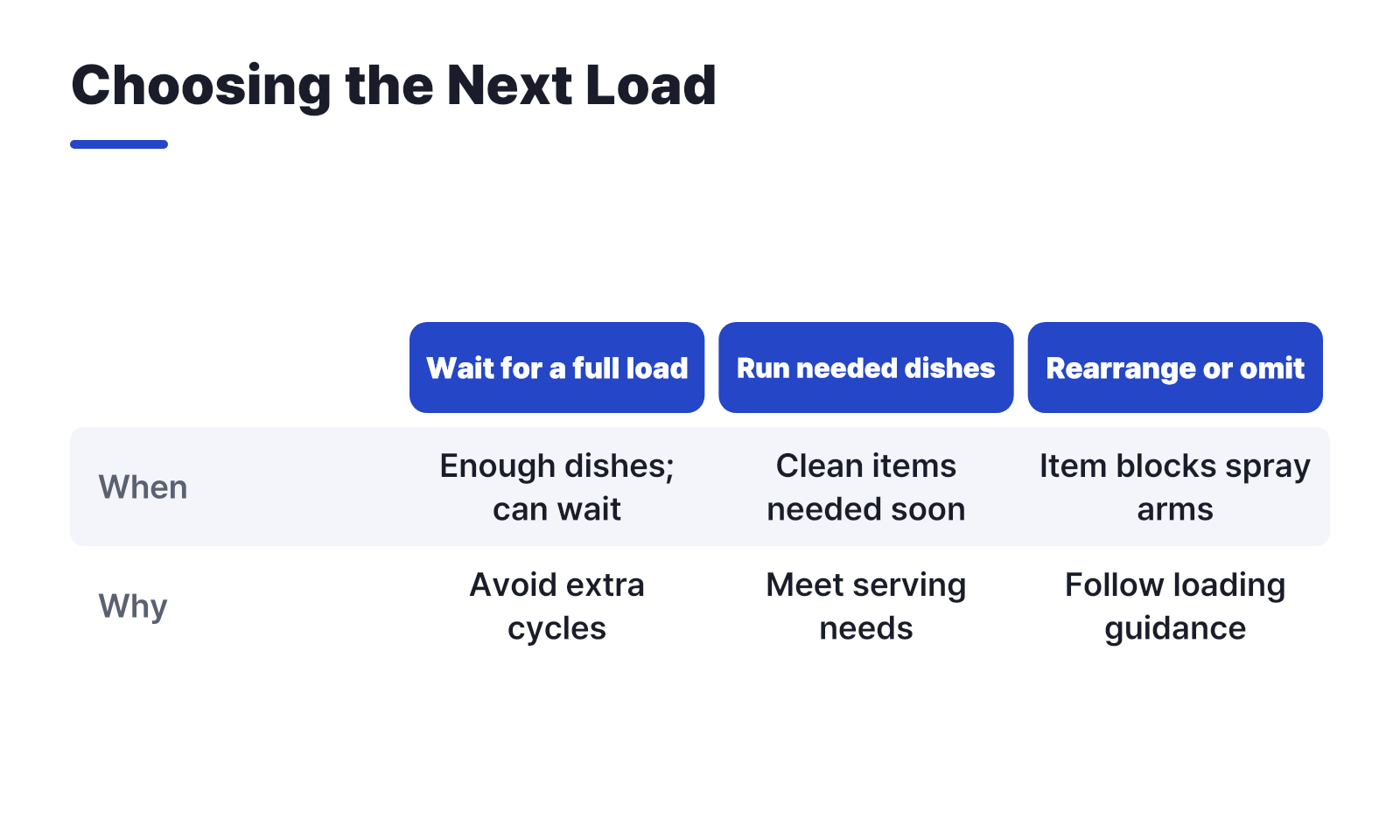
Choose based on how soon you need clean dishes and whether the available load can be arranged correctly. A nearly full, properly loaded machine is a practical choice when you can wait; a smaller load may make sense when clean plates or serving pieces are needed for the next part of the gathering.
| Situation | Practical choice | Why |
|---|---|---|
| Enough dishes for a well-arranged load, with no immediate need for them | Wait and run one full load | This follows the full-load guidance while avoiding an unnecessarily crowded rack. |
| You need clean dishes before the next meal or serving round | Run the load that fits correctly | Timing can matter more than waiting to fill every available space. |
| One or more items block the spray arms or do not fit the manual’s loading guidance | Rearrange the load or leave those items out | A completed cycle cannot make an unsuitable arrangement appropriate. |
Running fewer dishes per cycle can mean more cycles for the same pile of dishes. On the other hand, delaying every load can leave you without clean items when you need them. Use the next serving time, the number of dishes available, and the loading instructions to decide rather than treating “full” as permission to pack the racks tightly.
What should you check between cycles?
Between holiday loads, make a quick visual check of the racks, the visible spray arms, and the floor around the dishwasher. Remove an item that has shifted into the spray path, and use the manual’s cleaning directions for any filter or other part you are meant to maintain.
Do not take apart internal components or improvise a repair to keep the cleanup moving. Filter designs and removal instructions differ by model, so use the owner’s manual for routine maintenance. If a part is difficult to remove or you are unsure whether it is user-serviceable, leave it in place and contact the manufacturer or a qualified technician.
Pay attention to what happens during a cycle. A visible leak, unusual noise, or a noticeable change in operation is a reason to stop scheduling further loads and investigate safely. Do not reach into a running dishwasher or attempt electrical or plumbing work. If the problem is not clearly resolved by an instruction in the manual, stop using the appliance and contact the manufacturer or a qualified technician.

How should you schedule cycles with other appliances?
Dishwashing can be scheduled separately from other large household appliances when several are in use during a gathering. A holiday-hosting service recommends avoiding simultaneous operation of appliances such as a dishwasher, oven, dryer, and microwave; staggering tasks is a straightforward way to reduce the number of major appliances running at once.
That does not mean every home has the same electrical limits or that a dishwasher must always run alone. Avoid making assumptions about your home’s electrical system from a general hosting tip. If a breaker trips or you notice an electrical concern, stop using the affected appliance and get qualified help rather than repeatedly restarting it.
For a simple cleanup rhythm, run a load after a meal when it is arranged correctly, then decide whether another cycle is needed after the first one finishes. If the next load is ready and the dishwasher is operating normally, follow the manual and start it; if a warning sign appears, leave the machine off until the issue is addressed.
Before guests arrive, find the dishwasher manual and note its loading, detergent, and routine-care directions. That gives you a model-specific plan for each cycle and a clear point to stop if the machine does not behave normally.
References
- Resident Handbook | Housing | UTD
- Consumer Dishwashers | Department of Energy
- What are some tips to holiday hosting without appliance overload? - Cocoon
Information in this post was checked as of November 2026. Policies and prices may change, so please verify important details with official sources.
Comments
Post a Comment