
To prevent water spots on holiday wine glasses, dry each glass promptly after its final rinse with a clean, lint-free or microfiber cloth. White marks usually form when droplets dry and leave minerals behind, so the most useful routine is to limit mineral residue, avoid excess detergent, and finish with careful drying.
For existing spots, a white-vinegar soak can help when the marks are mineral deposits. If a cloudy film remains after vinegar, the glass may be etched rather than simply dirty.
In this guide
- Why spots form and how to identify them
- How to handle dishwasher-washed wine glasses
- How to wash, dry, and polish glasses by hand
- A practical order for preparing glasses before guests arrive
Why do wine glasses get water spots?
Water spots are visible marks left when droplets dry on glass and minerals remain behind. A distinct white spot is different from a more even cloudy haze, although both can come from mineral deposits; vinegar can help with those deposits, while a persistent haze can point to permanent etching.
That distinction changes what to do next. A removable deposit sits on the glass surface, so cleaning may clear it. Etching is damage to the glass surface, and repeated scrubbing or adding more detergent will not restore the original clarity.
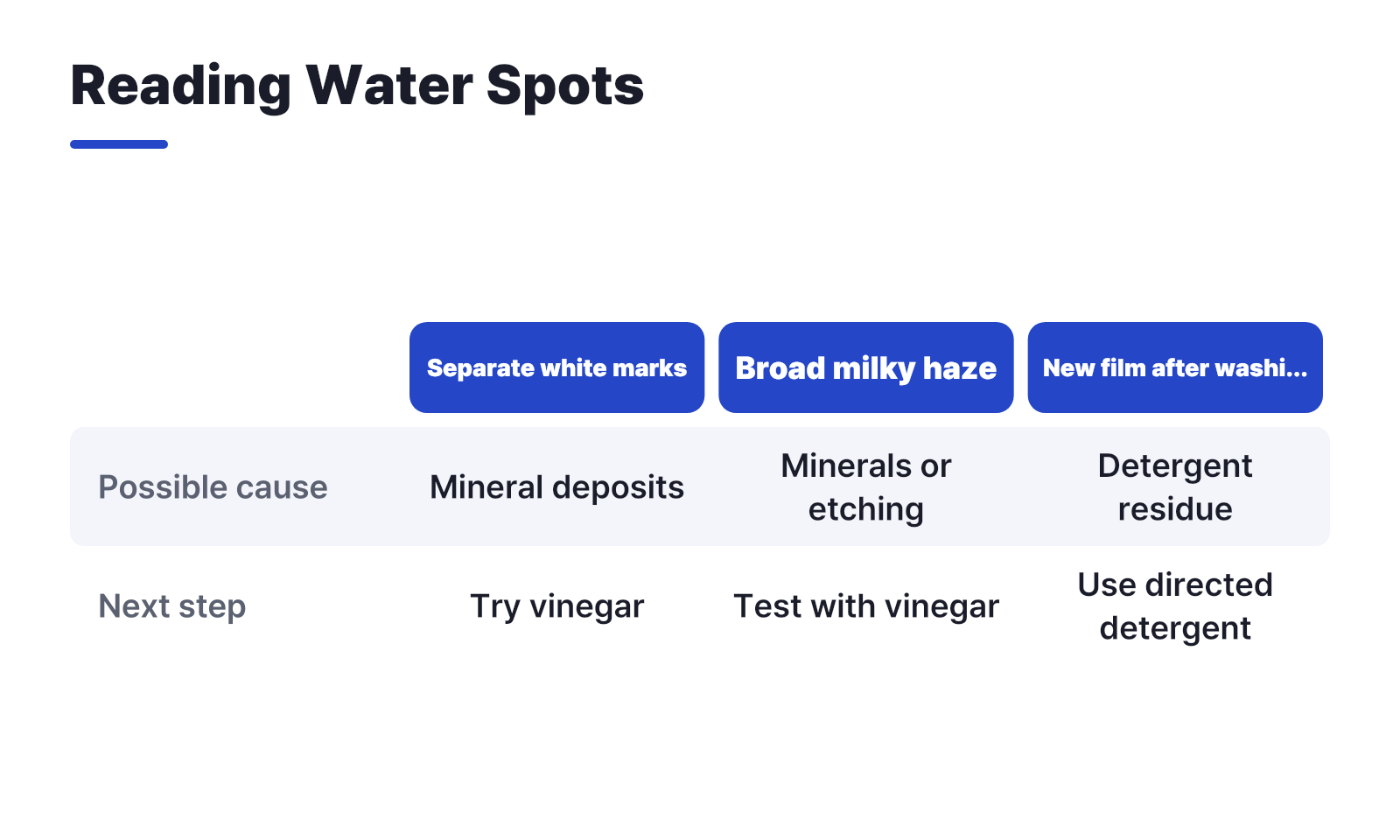
| What you see | What it may indicate | Useful next step |
|---|---|---|
| Separate white marks | Dried droplets may have left mineral deposits. | Try a vinegar treatment, then rinse and dry promptly. |
| A broad, milky haze | Mineral film is possible; persistent haze may be etching. | Test a small area with white vinegar. If the haze remains, avoid treating it as removable residue. |
| A new film after washing | Detergent residue can contribute to film and glass etching. | Use the detergent amount directed by the product label and dishwasher manual rather than adding more. |
For a simple check, rub a small cloudy area with white vinegar and observe whether the film clears. A change points toward mineral residue; no change suggests the glass may be permanently etched. This test helps distinguish two different problems, but it does not identify a dishwasher fault by itself.
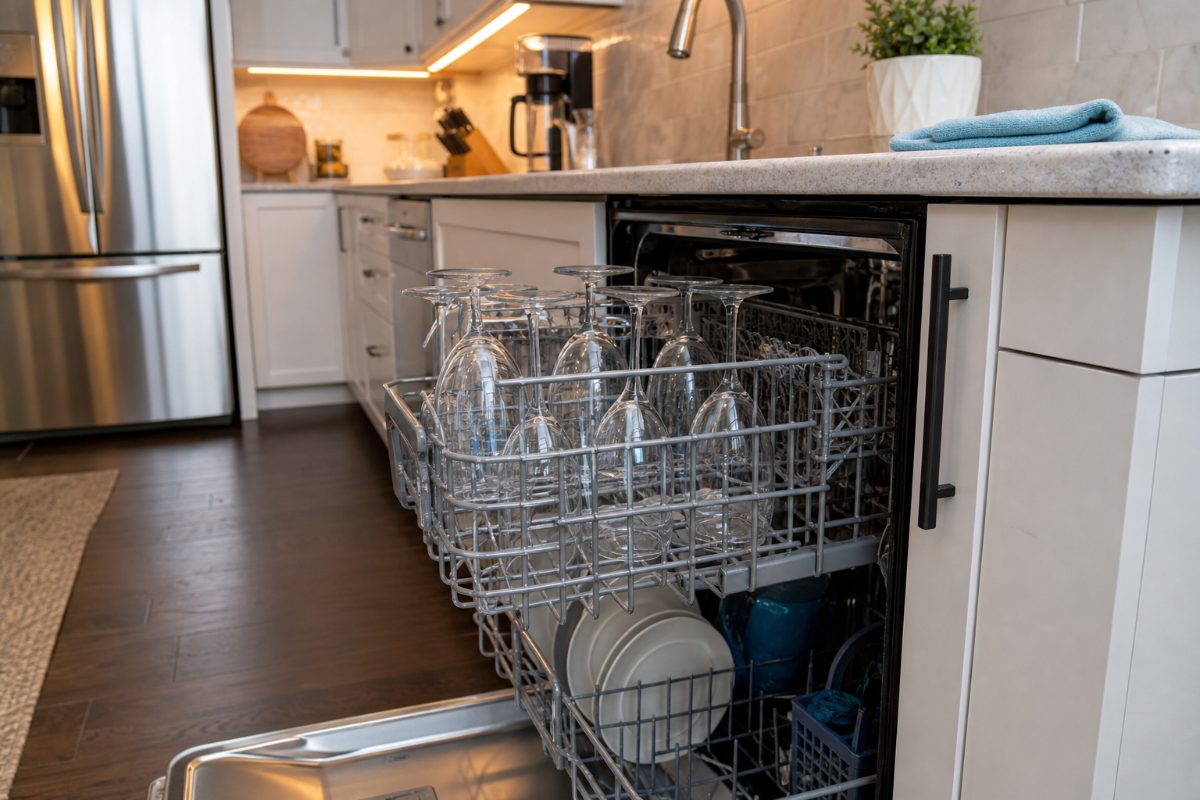
How should you handle wine glasses in the dishwasher?
For dishwasher-washed wine glasses, follow the glassware and dishwasher instructions, use detergent as directed, and dry the glasses promptly after the rinse. More detergent does not prevent mineral spots; excess can leave residue and contribute to etching, so increasing the dose is a poor response to spotted glasses.
Before a holiday load, check whether the glass manufacturer and dishwasher manual allow the particular glasses to be machine-washed. Crystal and delicate stems deserve special attention to those instructions; do not assume that every glass has the same care requirements. If the instructions do not support machine washing, wash those pieces by hand instead.
Rinse aid is part of the dishwasher setup, but the care information here does not establish a setting or dosage for every machine and product. If you use it, follow the rinse-aid label and the dishwasher manual. Do not compensate for water spots by pouring in extra detergent or changing several settings at once: that makes it harder to tell whether the problem is mineral residue or product buildup.
After the cycle, inspect the glasses before putting them away. If droplets are still on the surface, dry them with a clean, lint-free cloth rather than waiting for the droplets to evaporate. Microfiber is another suitable option for polishing glassware while helping reduce scratches and spots.
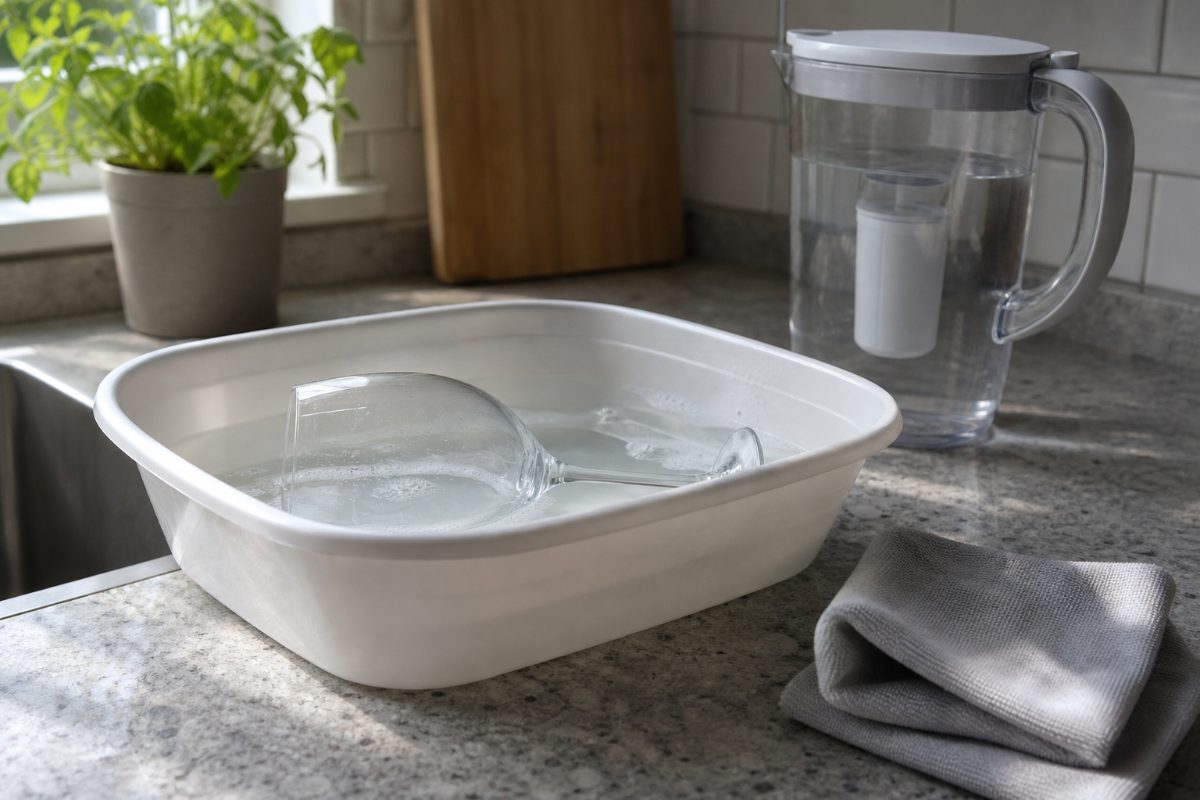
How do you wash and dry spotted glasses by hand?
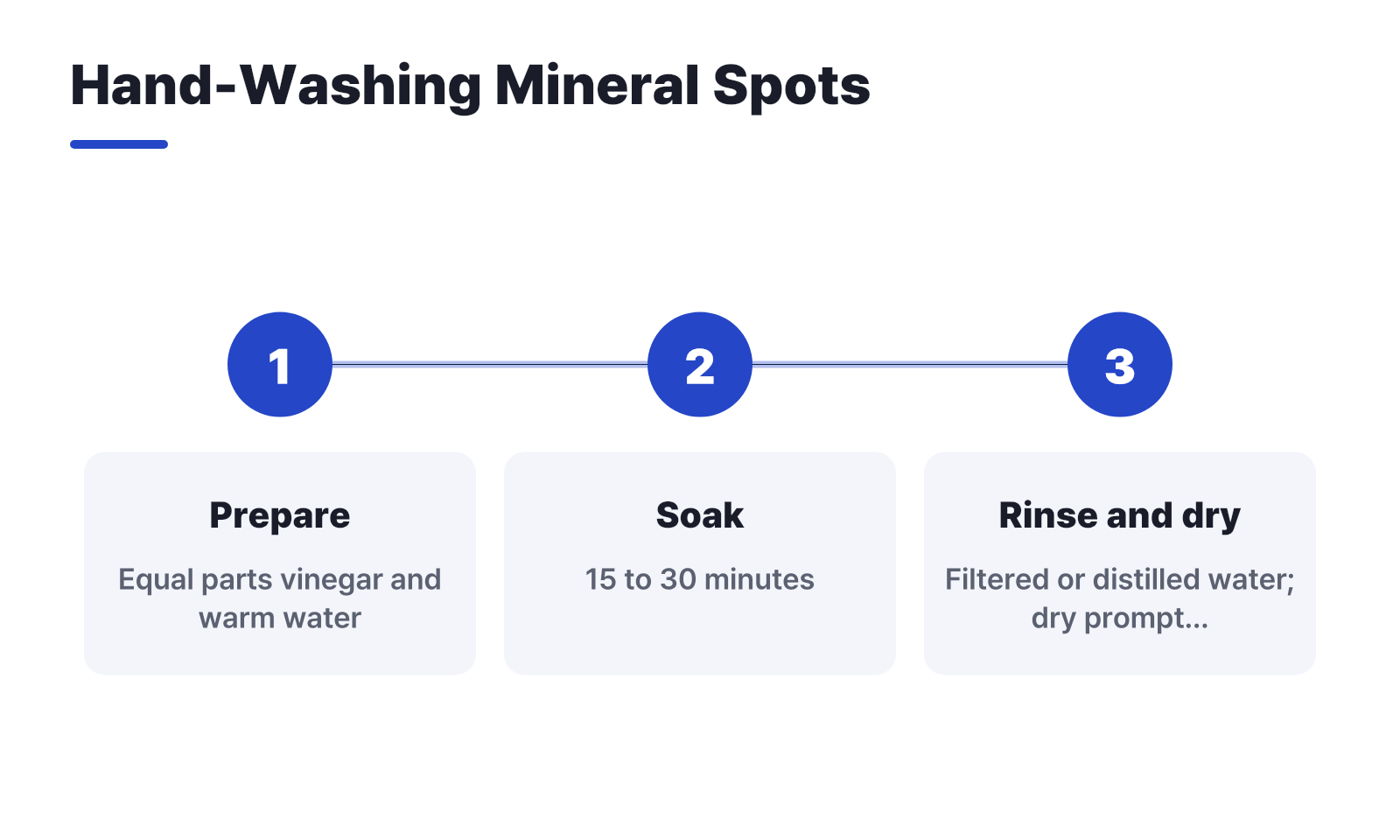
For mineral spots, soak the glass in a mixture of equal parts white vinegar and warm water for 15 to 30 minutes, then rinse with filtered or distilled water and dry immediately with a lint-free cloth. The mild acid in vinegar dissolves calcium and magnesium compounds, while the final rinse helps avoid leaving more tap-water minerals on the surface.
- Set the glass in a basin and cover the spotted area with equal parts white vinegar and warm water.
- Leave it to soak for 15 to 30 minutes. Use the shorter end for light deposits and the longer end when marks remain; do not treat the timing as a guarantee for etched glass.
- Rinse with filtered or distilled water, then dry the glass promptly with a clean lint-free cloth.
The soak window spans 15 minutes: 30 minutes − 15 minutes = 15 minutes. That is the difference between the two ends of the suggested soak range, not the total time for rinsing and drying.
| Soak choice | Time in the solution | Best use |
|---|---|---|
| Short end | 15 minutes | Start here for light mineral marks. |
| Long end | 30 minutes | Use when deposits remain after a shorter soak. |
If vinegar alone does not lift heavy mineral buildup, a paste made from three parts baking soda and one part water is another cleaning option. Apply it to the spotted area and gently rub with a soft cloth in circular motions, then rinse with filtered water and dry promptly. Keep the pressure light; the goal is to lift deposits, not scour the glass.
For a clearer finish, use a clean microfiber cloth or lint-free towel and polish gently. A cloth that is already damp or dusty can leave marks of its own, so set out a fresh one for the final drying step. Avoid twisting a glass by its bowl and stem in opposite directions while polishing; handle it steadily and use a light touch, especially with thin-stemmed pieces.
What is the quickest way to prepare several glasses?
When preparing several wine glasses for a holiday gathering, use a repeatable sequence: wash a manageable group, rinse, dry each glass as soon as possible, then set the finished glasses aside on a clean surface. Prompt drying matters because droplets left to evaporate can deposit minerals, and a consistent order reduces the chance that wet glasses sit while attention shifts to the next task.
For dishwasher-safe glasses, run the load according to the appliance and glassware instructions, then make drying the next task rather than leaving wet glasses to air-dry. For delicate or machine-incompatible glasses, wash them by hand and finish each one before moving on. If several glasses are already spotted, treat those separately with the vinegar method instead of adding extra detergent to a new dishwasher load.
During a gathering, a glass that has been rinsed should also be dried before it is stored or set out again. A quick wipe with a clean lint-free or microfiber cloth deals with the water left on the surface; simply letting that water evaporate can recreate the marks you are trying to prevent.
Choose the next step from the mark itself: dry clean glasses promptly to prevent spots, use vinegar for suspected mineral deposits, and stop scrubbing if a cloudy film does not respond to vinegar. For uncertain glassware or dishwasher settings, use the care instructions for that glass and appliance before the next load.
References
- How to Clean Wine Glasses Perfectly Every Time - 2026 - MasterClass
- Spotty Glassware from Hard Water: Causes & Fixes
- How to Clean Glassware: Tips & Tricks – Lenox Corporation
- Client Challenge
Information in this post was checked as of November 2026. Policies and prices may change, so please verify important details with official sources.
Comments
Post a Comment