
For Thanksgiving, hand-wash crystal wine glasses unless their care instructions clearly say they are dishwasher-safe. Many regular wine glasses can go in a dishwasher on a delicate cycle, but heat, contact with other items, and repeated washing can chip or permanently cloud delicate glass.
On this page
- Can crystal wine glasses go in the dishwasher?
- How to hand-wash crystal during Thanksgiving cleanup
- How to load dishwasher-safe wine glasses
- What to do about older glasses and cloudy marks
Can crystal wine glasses go in the dishwasher?
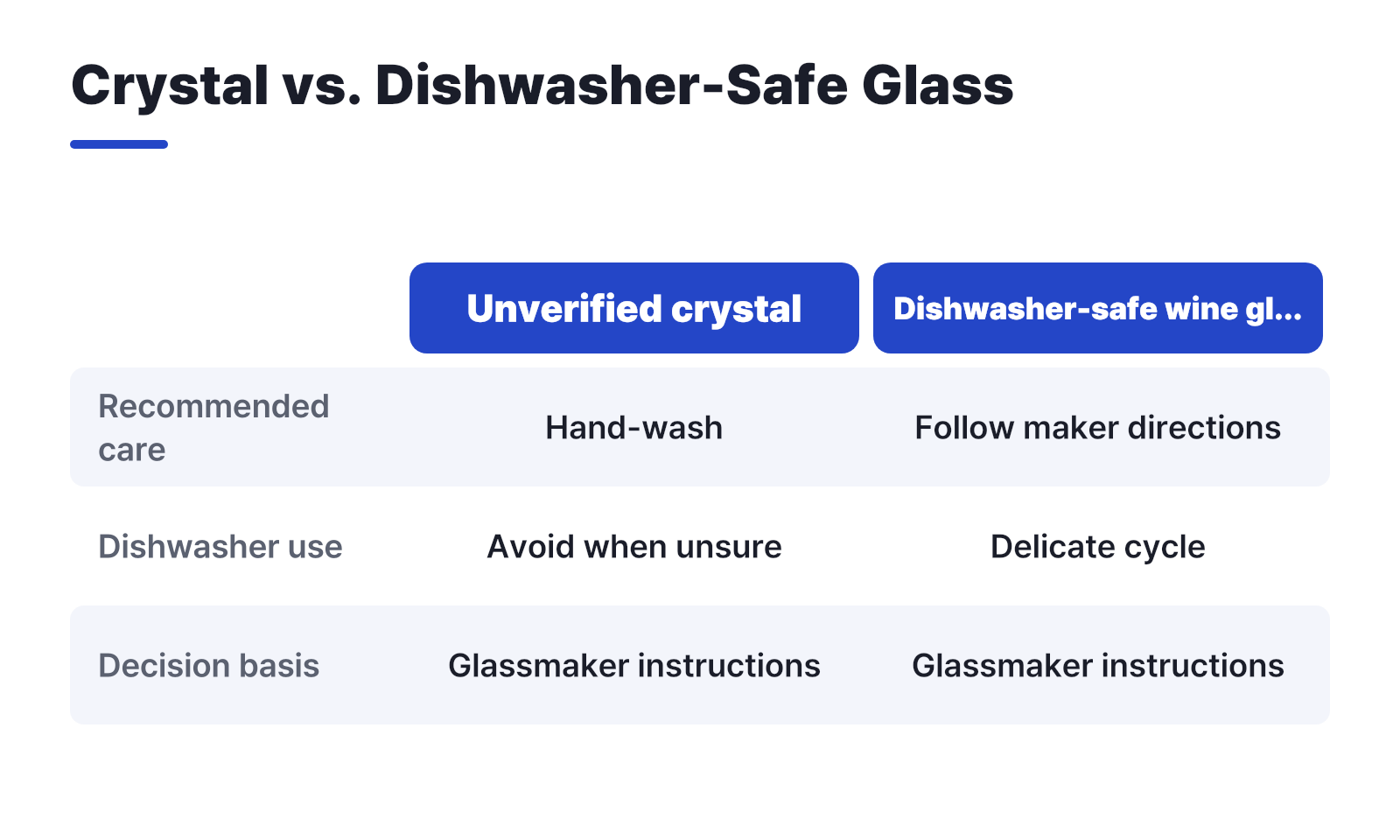
Crystal wine glasses should generally be hand-washed for Thanksgiving, especially when their care instructions are missing or say to hand-wash. Some ordinary wine glasses are suitable for a dishwasher, but that does not make crystal safe for the same cycle. Use the glassmaker’s care directions to decide for a specific set.
Crystal is a type of glassware made in forms that can be more delicate than everyday drinking glasses. Waterford’s care guidance recommends hand-washing crystal and glass separately in warm, soapy water, rinsing thoroughly, and drying with a lint-free cloth. Waterford’s crystal instructions also call for moderately hot water, mild detergent, and a soft cleaning cloth.
The practical Thanksgiving rule is simple: treat crystal as hand-wash-only unless the manufacturer identifies that particular glass as dishwasher-safe. A general statement that “most wine glasses” can be washed in a dishwasher applies to wine glasses as a broad category, not automatically to every crystal glass. If the set came with a care card or has product instructions, use those rather than guessing from its shape or appearance.
Dishwasher washing can also affect glass over time. Some wine glasses may develop etching, a permanent change that can leave the surface irreversibly cloudy. Crystal that matters to you, or that you would not want to replace, is a poor candidate for testing in a cycle when its care requirements are unknown.
How to hand-wash crystal during Thanksgiving cleanup
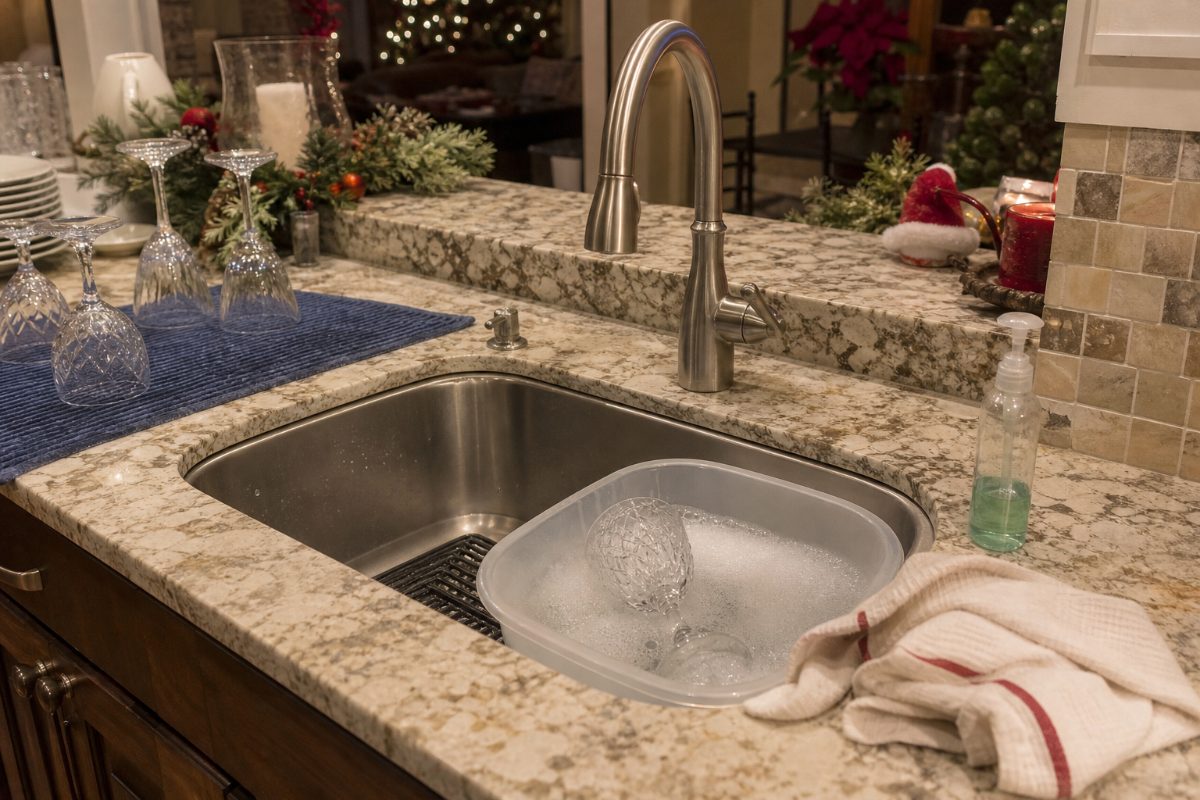
Rinse crystal wine glasses soon after serving, then wash them individually in a small basin or a protected part of the sink. This approach keeps several stemmed glasses from shifting into one another and reduces the chance of a slippery glass striking a hard sink surface. A small plastic tub or a large silicone or plastic bowl can serve as a contained washing space.
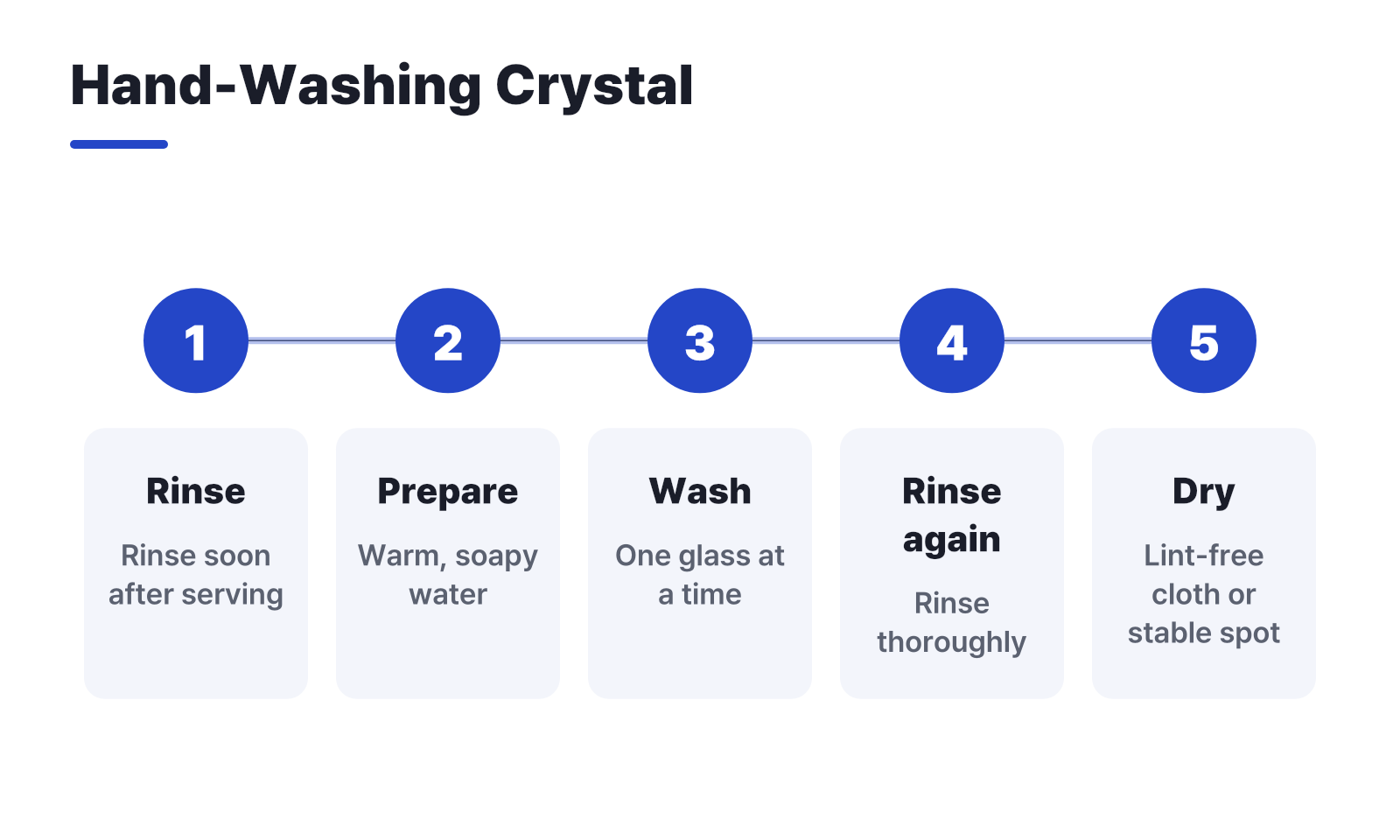
- Rinse each glass as soon as practical after use. This helps prevent wine residue from sitting on the glass while dinner cleanup is delayed.
- Prepare warm, soapy water with a mild detergent, following the glassmaker’s instructions when available.
- Wash one glass at a time with a soft cleaning cloth. Hold the bowl of the glass securely rather than twisting the stem against the bowl.
- Rinse thoroughly so soap does not remain on the surface.
- Dry with a lint-free cloth, or set the glass somewhere stable while you finish the rest of the cleanup.
For extra protection, place a rubber shelf liner in part of the sink before washing. A smaller washing area also gives each glass less room to slide around. Avoid crowding several glasses together in a basin: impacts between stems or rims can chip or break them even when the water and detergent are suitable.
Thanksgiving cleanup is easier to manage if crystal is separated from the dishwasher-bound dishes before the first load starts. Rinse the used glasses, set them in a stable area away from the sink’s edge, and wash them in a small batch after the main dishwashing is underway. That keeps them out of a crowded rack and avoids a last-minute decision about whether an unfamiliar glass can handle the cycle.
How to load dishwasher-safe wine glasses
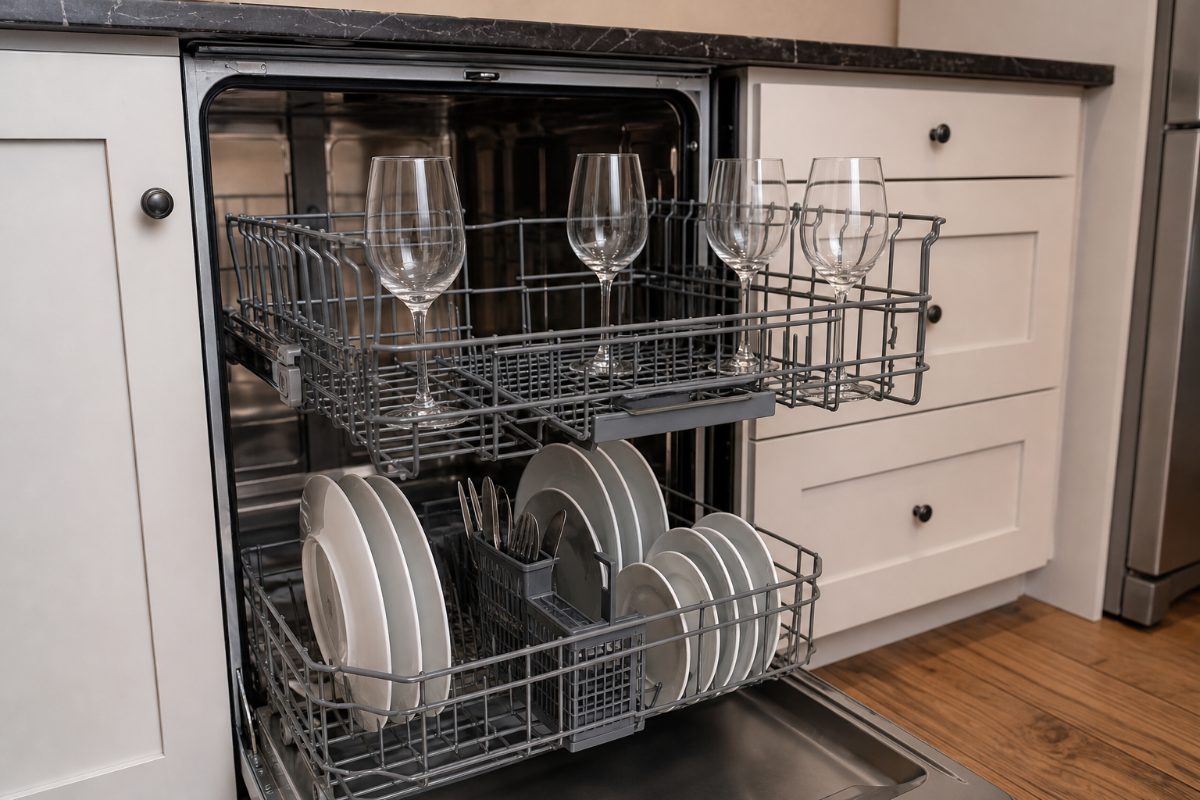
If the manufacturer says a wine glass is dishwasher-safe, use a delicate or gentle cycle, place the glasses on the top rack when the rack design allows, skip heated drying, and leave enough space that glasses cannot touch. These steps reduce direct impacts and avoid the harsher treatment of a standard cycle, but they do not turn hand-wash-only crystal into dishwasher-safe glassware.
Before loading, look at the glass’s position relative to nearby dishes and the rack. The bowl, rim, and stem should not rest against another glass or a plate. Leave room for the glass to remain separated during the wash instead of assuming that a tight arrangement will hold it in place.
Follow the dishwasher manual and the glassmaker’s care directions for cycle and detergent choices. Do not substitute a hotter or more intensive program just because the machine is already running a holiday load. The American Cleaning Institute advises a delicate cycle, no heated drying, and spacing wine glasses so they do not hit one another; these are useful safeguards for dishwasher-suitable wine glasses.
After the cycle, handle the glasses carefully and avoid stacking them while they are hot. If any glass has shifted, is touching another item, or does not fit securely in the rack, wash it by hand instead. A special stemware holder can help only when it supports the glass without forcing the bowl or stem against other dishes.
What about older glasses and cloudy marks?
For older crystal or a set stored for a long time, use hand-washing unless you can find care instructions for that specific glass. Age alone does not tell you which wash cycle is suitable, and appearance is not a reliable substitute for the maker’s directions. Gentle hand-washing avoids exposing an uncertain piece to dishwasher conditions.
Cloudiness can be difficult to judge by sight alone. Etching from dishwasher washing is a permanent surface change, while a mark that sits on the surface may be residue. Do not assume that every cloudy glass is etched or that every cloudy mark can be removed; repeated dishwasher cycles can make etching worse rather than restore clarity.
If a glass already looks dull, stop putting it through the dishwasher until you have checked its care directions. Wash it gently by hand, rinse it thoroughly, and dry it with a lint-free cloth. If the cloudy appearance remains, avoid abrasive scrubbing or trying a stronger cleaning product without guidance for that glass. The surface may be permanently affected.
For a Thanksgiving table with mixed glassware, sort glasses before cleanup: crystal and glasses with unknown care instructions go to the hand-wash area; clearly dishwasher-safe wine glasses can go in a separated top-rack position on a delicate cycle. That quick decision keeps the most delicate pieces out of a crowded load. If you are unsure about one glass, set it aside and check its care instructions before washing it.
References
- Wine Glasses & Crystal | The American Cleaning Institute (ACI)
- What things can you put in the dishwasher?
- How to Wash Dishes by Hand the Most Sanitary Way - OXO
- 5 Tips for Cleaning Wine Glasses, from a Napa Valley Wine Expert | America's Test Kitchen
- How to Care & Clean Waterford Crystal Glassware - Waterford®
- Care Guide - Crystal drinkware and more - Waterford
- Cleaning Up After the Big Feast | Seventh Generation
- How to Clean Wine Glasses in the Dishwasher Without Breaking Them - Chateau Grand Traverse
Information in this post was checked as of November 2026. Policies and prices may change, so please verify important details with official sources.
Comments
Post a Comment